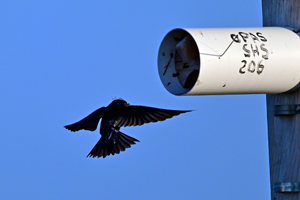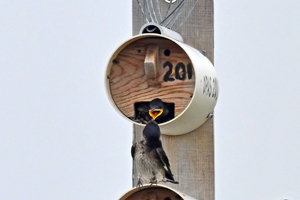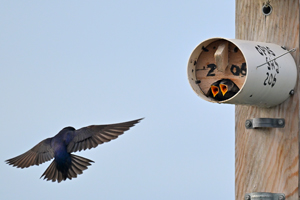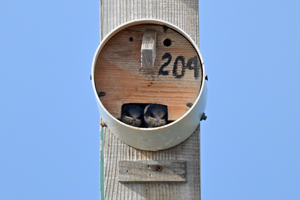

Purple Martins

Purple Martins at 3 Crabs - 2026 Season

August 15 - September 19, 2026

This is an addendum to the August 14th report on the final nest box check at 3 Crabs for the 2026 season. That report continues below following these updates. The following narrative is based on my personal observations on 24 days, from August 15-September 14, sometimes visiting 3 Crabs both morning and evening. My goal was to document the progress of the last three chicks to hatch at 3 Crabs this year. And to avoid dealing with it later, I will tell you now that only two of the three chicks in this nest survived to fledge.

On August 14th most of the chicks had fledged. Only two nests, Box 5C and Box 6C, had chicks that had not fledged. Box 6C had four chicks that appeared to be about 18 days old. On August 24th, two of those chicks were looking out the door. The following day only one chick was at the door, and on August 26th no more chicks were seen at this nest and we assume all four fledged.
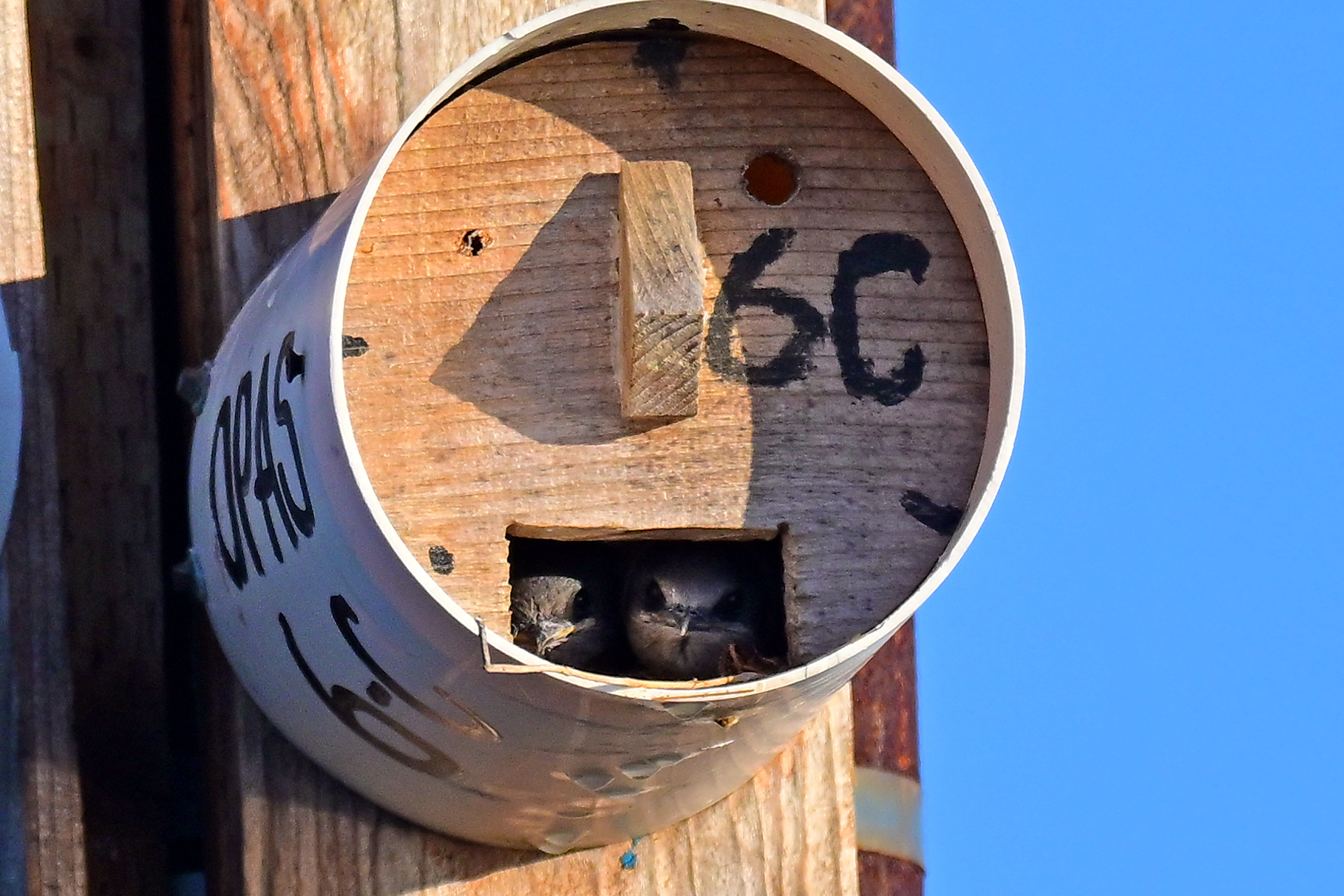
OPAS 6C

Purple Martin Box 6C at 3 Crabs. 8/24/2026
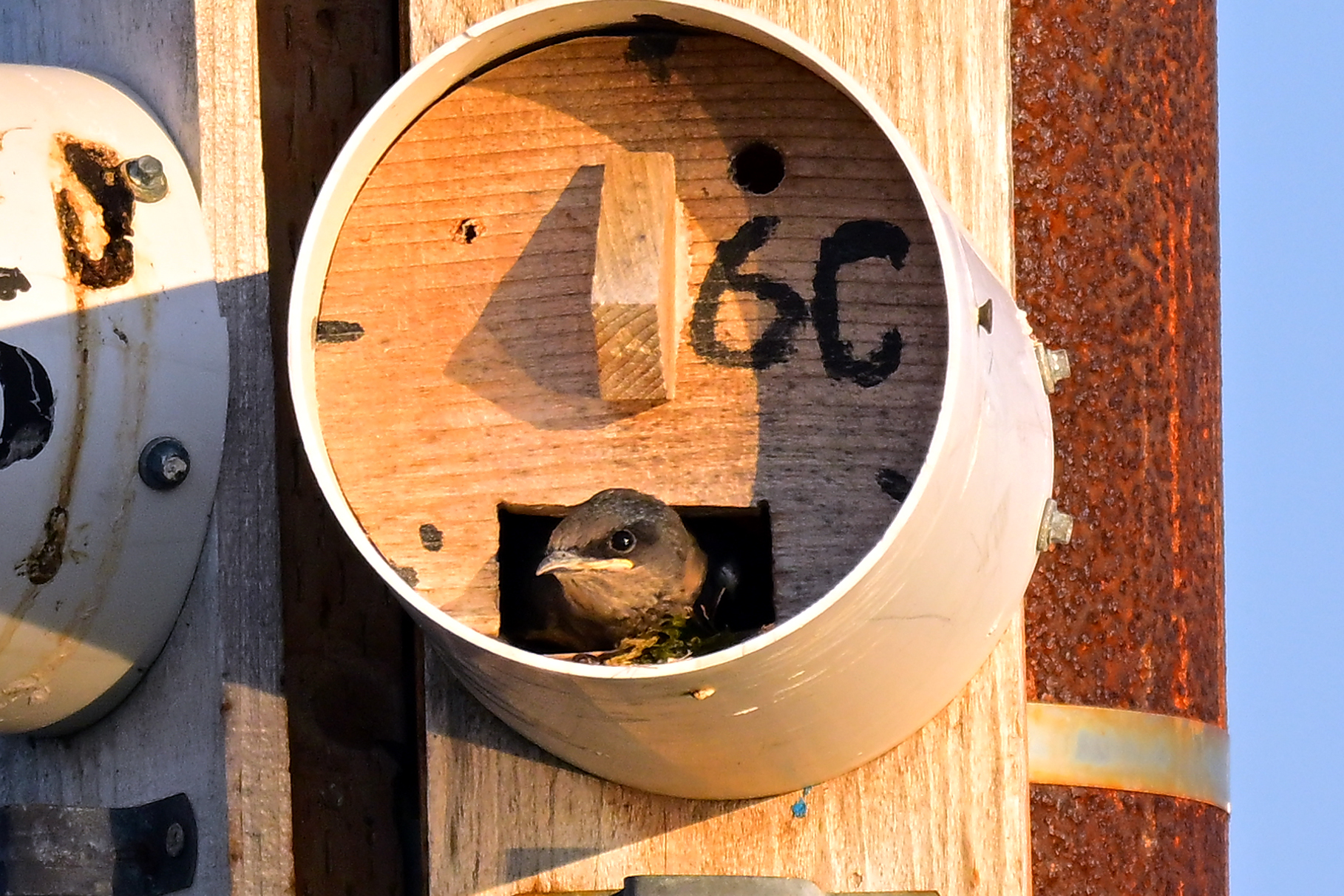

OPAS 6C

Purple Martin Box 6C at 3 Crabs. 8/25/2026


On August 26th the female in Box 5C was actively feeding her 15-day-old chicks, but they had not started looking out of the nest.
OPAS 5C

Purple Martin Box 5C at 3 Crabs. 8/26/2026
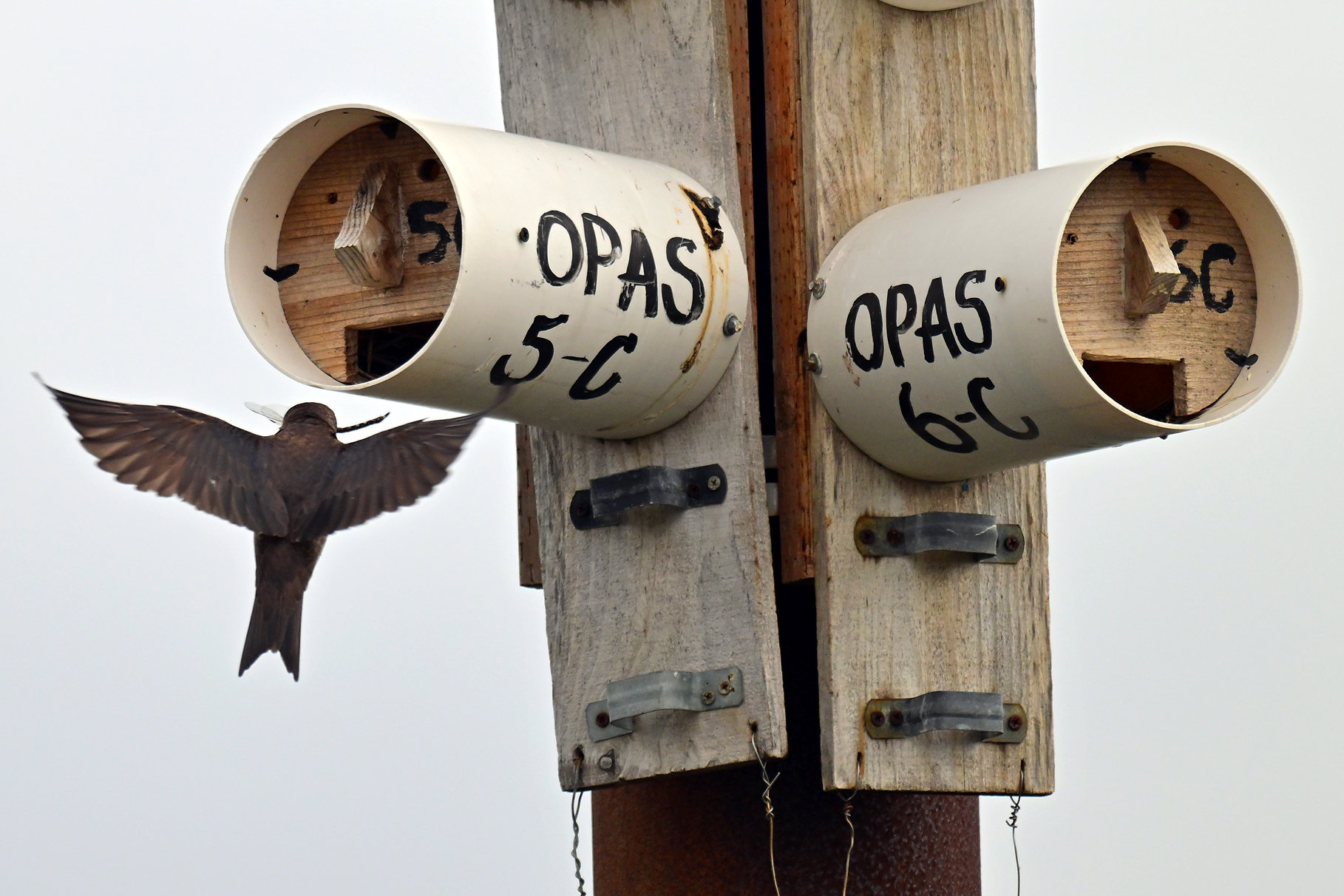

OPAS 5C

Purple Martin Box 5C at 3 Crabs. 8/26/2026


After August 26th, only this female and two other Purple Martins were seen. These other birds seemed to follow the female around but didn't appear to help feed the chicks. Perhaps they were two of the fledglings from Box 6C that weren't ready to leave with the rest of the colony. They were last seen on September 1st.
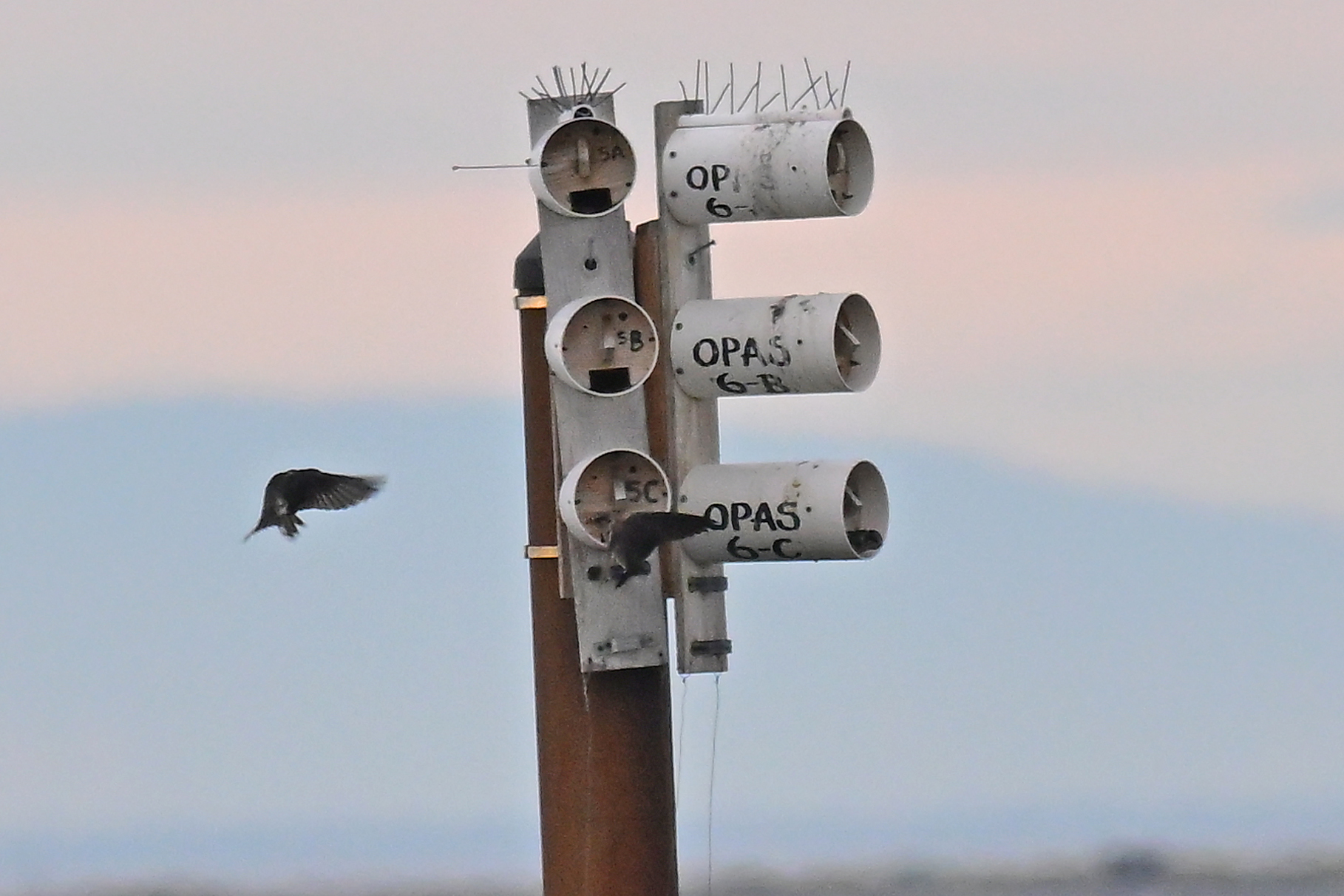
OPAS 5C

Purple Martin Box 5C at 3 Crabs. 9/1/2026


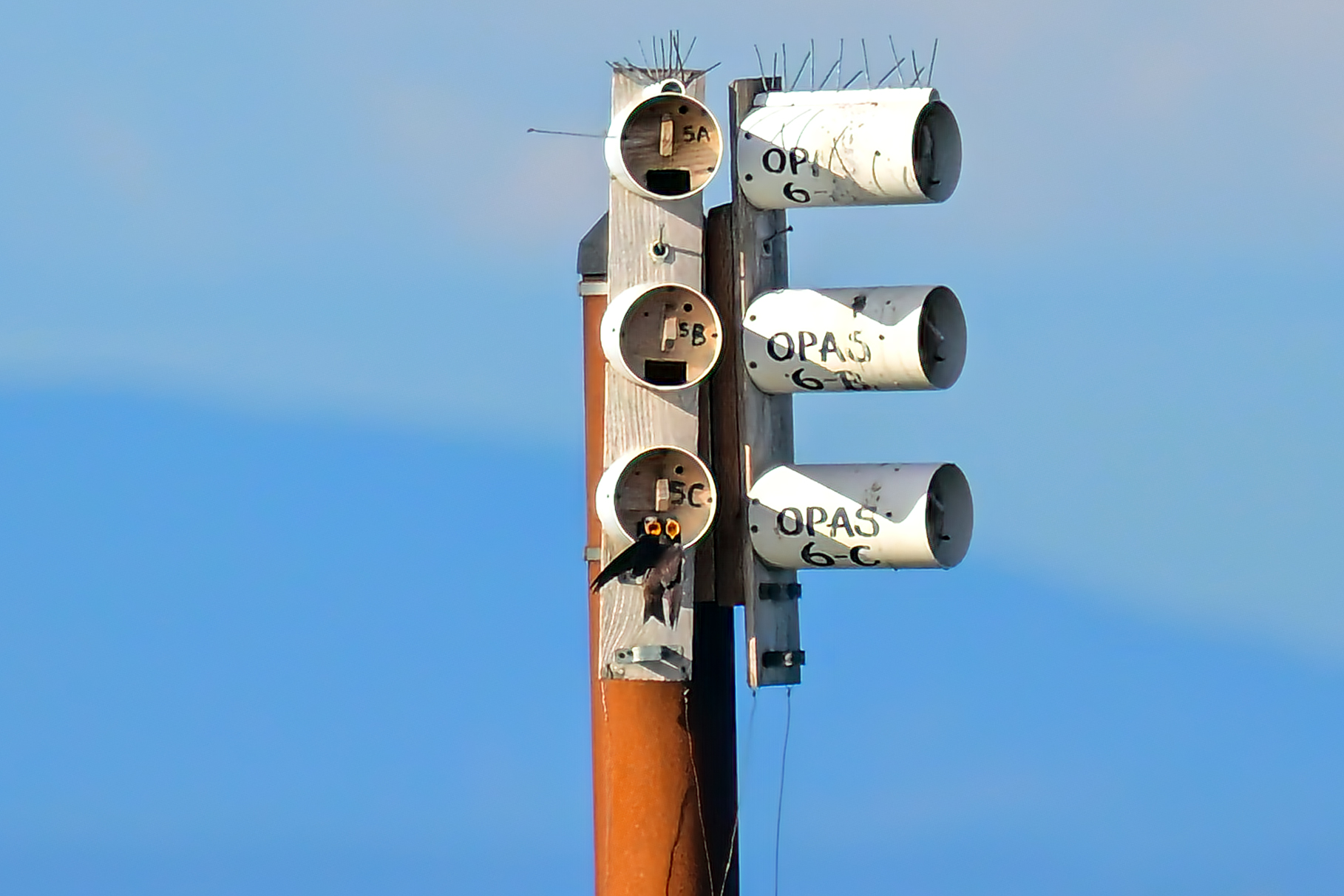
On September 3rd there were two chicks with their heads out of the nest waiting for food. They are now 23-24 days old, and could fledge as soon as September 6th.
OPAS 5C

Purple Martin Box 5C at 3 Crabs. 9/3/2026


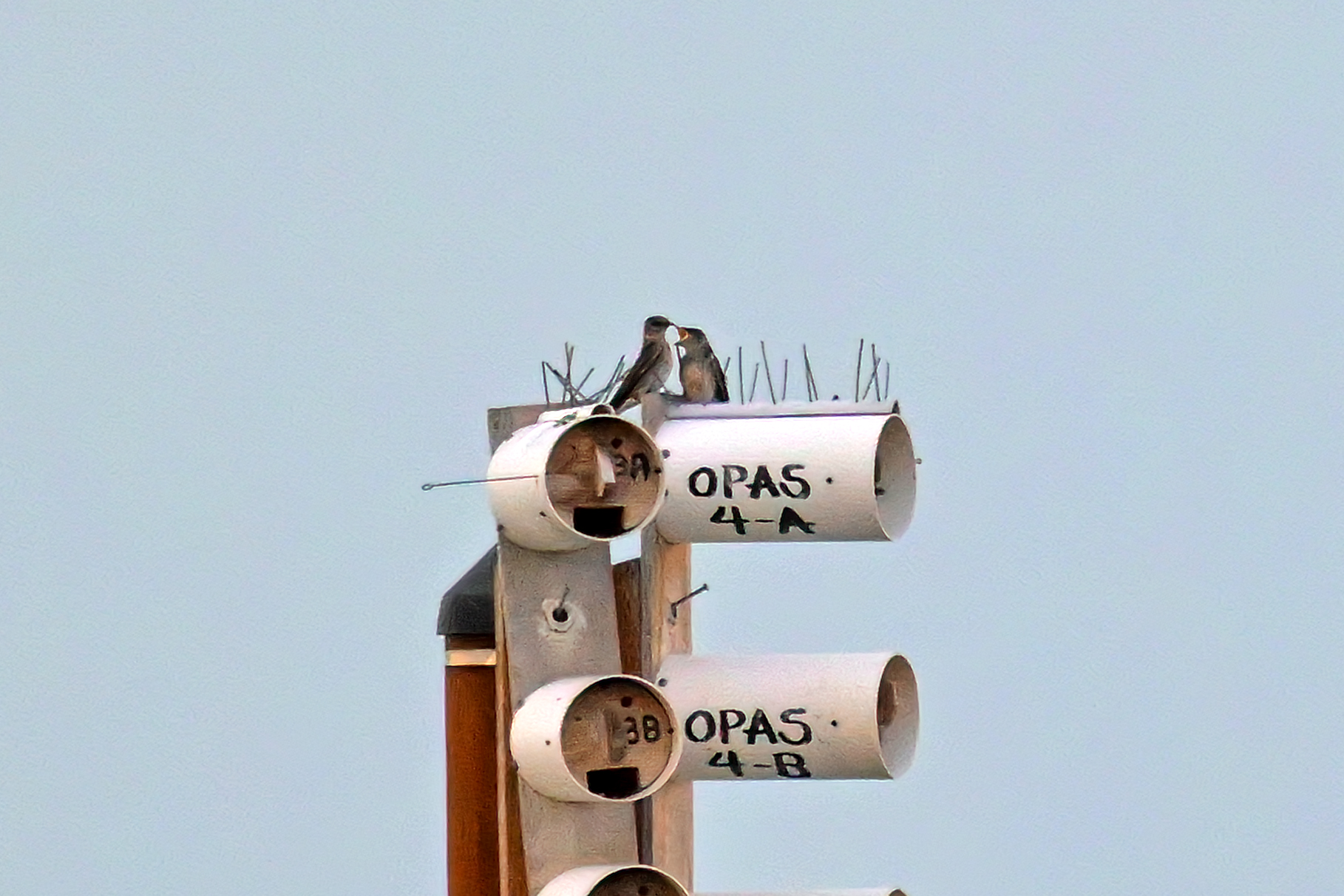
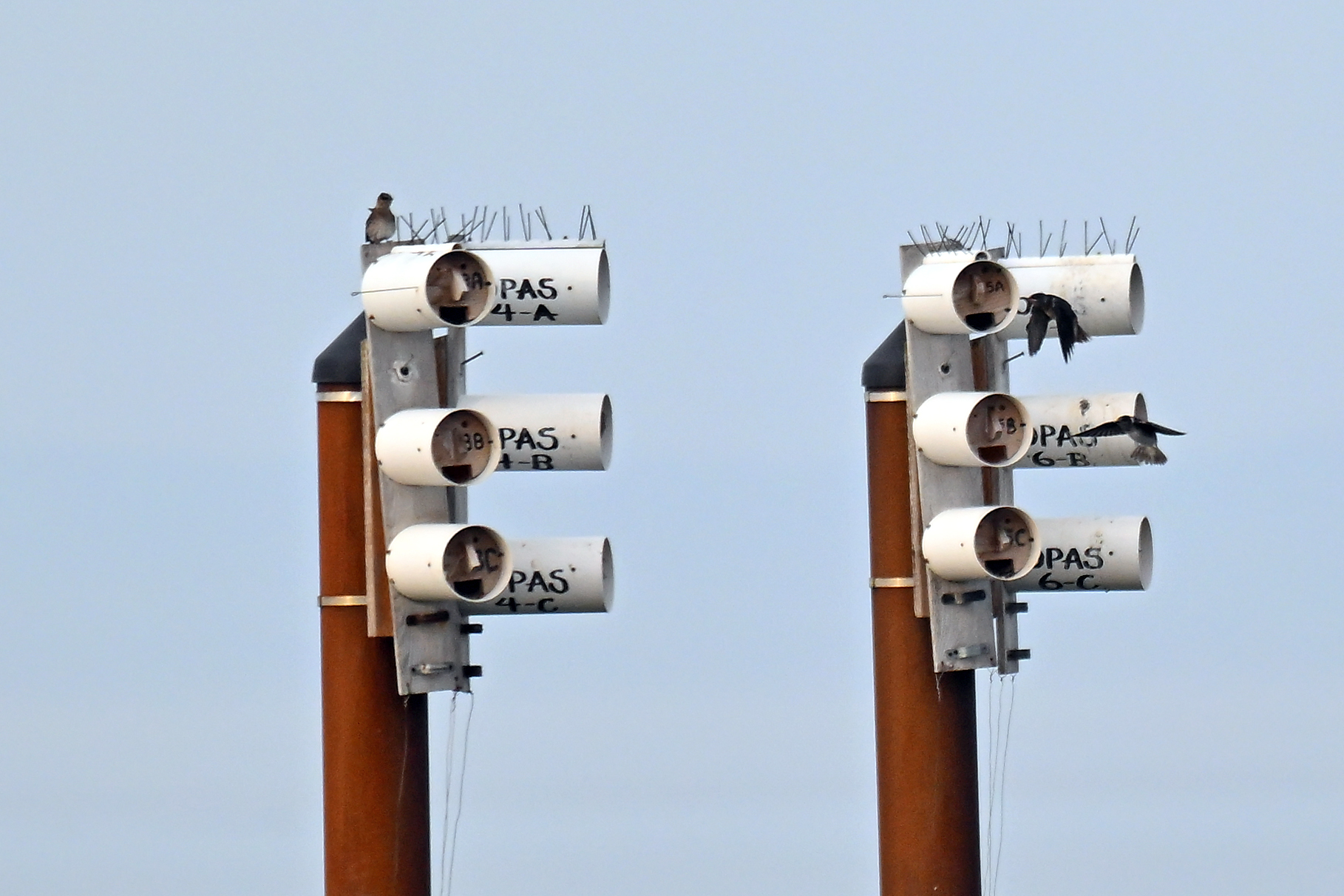
At 7am on September 7th I got a long-distance photo from shore showing a fledgling getting fed on top of Box 4A. Not shown in this cropped image is a chick just inside the entrance to Box 5C. So it appears the first chick has fledged. At 6pm both chicks were getting fed in Box 5C.
OPAS 5C

Purple Martin fledgling from Box 5C at 3 Crabs. 9/7/2026


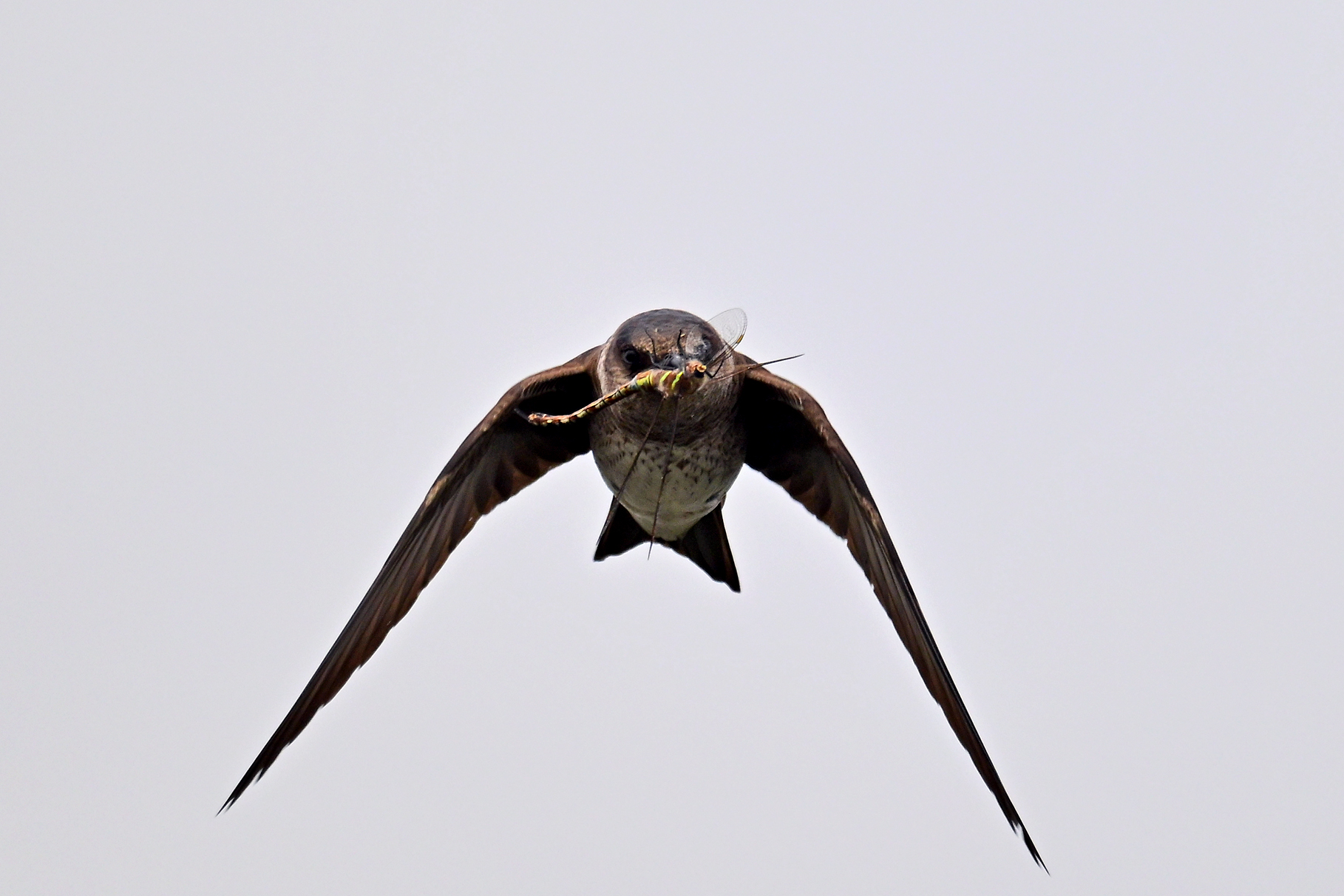
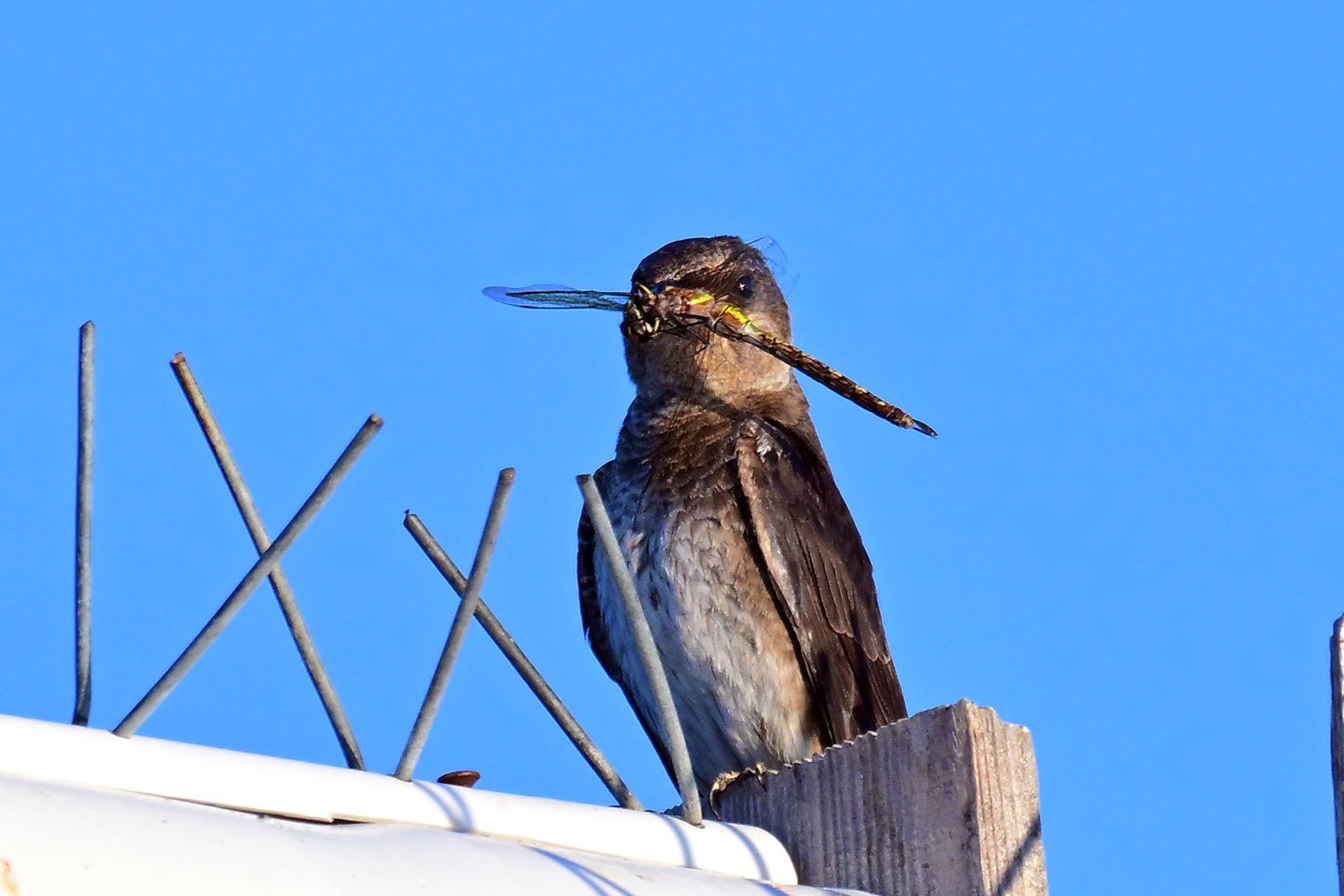
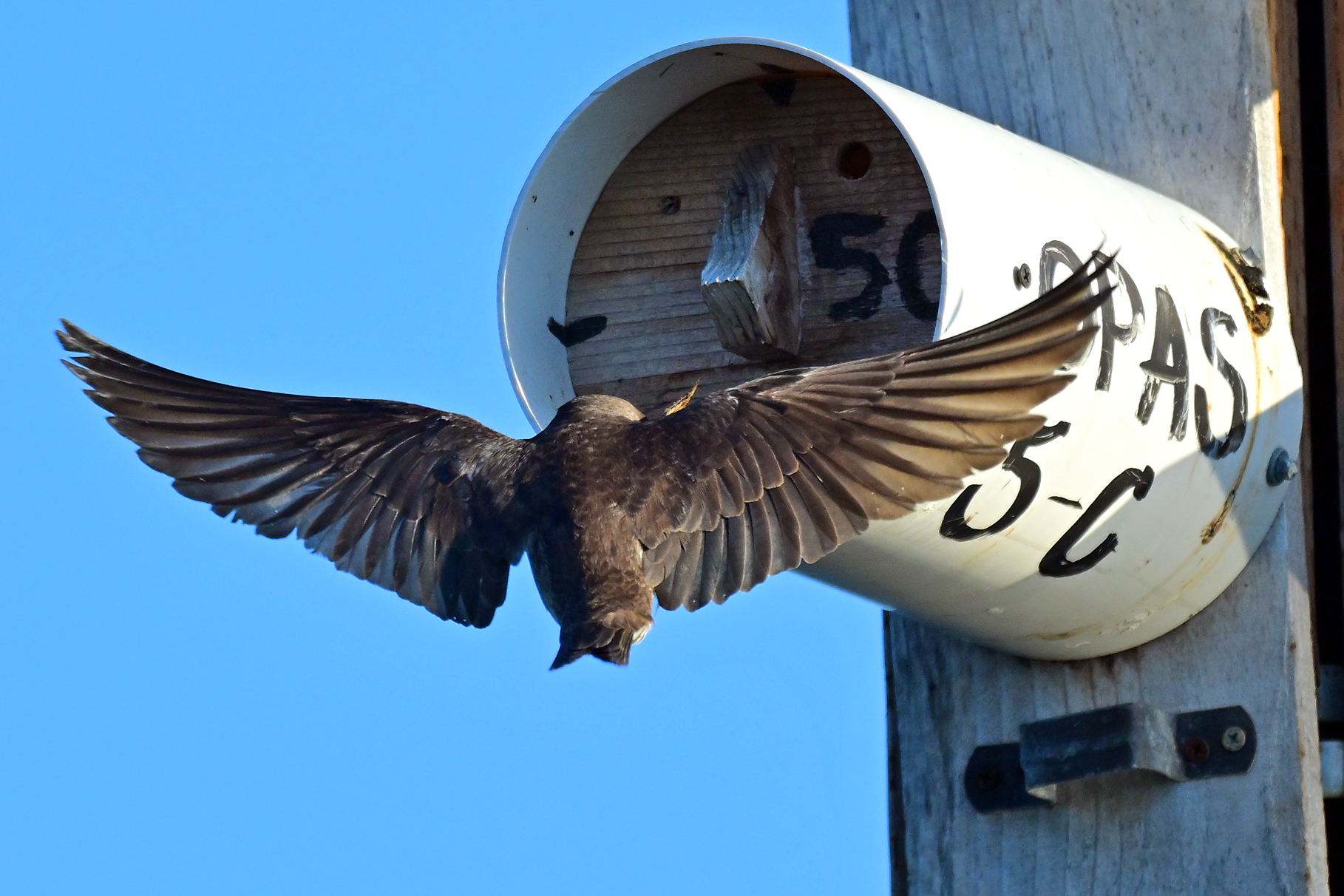
At 7:51 am and 8:12 am on September 8th, mom delivered dragonflies to the nest. After the second delivery she removed a fecal sac, immediately after which one of the chicks came out to the entrance, looked around for a minute, and then flew out. The other chick remained in the nest.
OPAS 5C

Purple Martin mother bringing dragonfly to chicks in Box 5C at 3 Crabs. 9/8/2026

OPAS 5C

Purple Martin mother bringing dragonfly to chicks in Box 5C at 3 Crabs. 9/8/2026
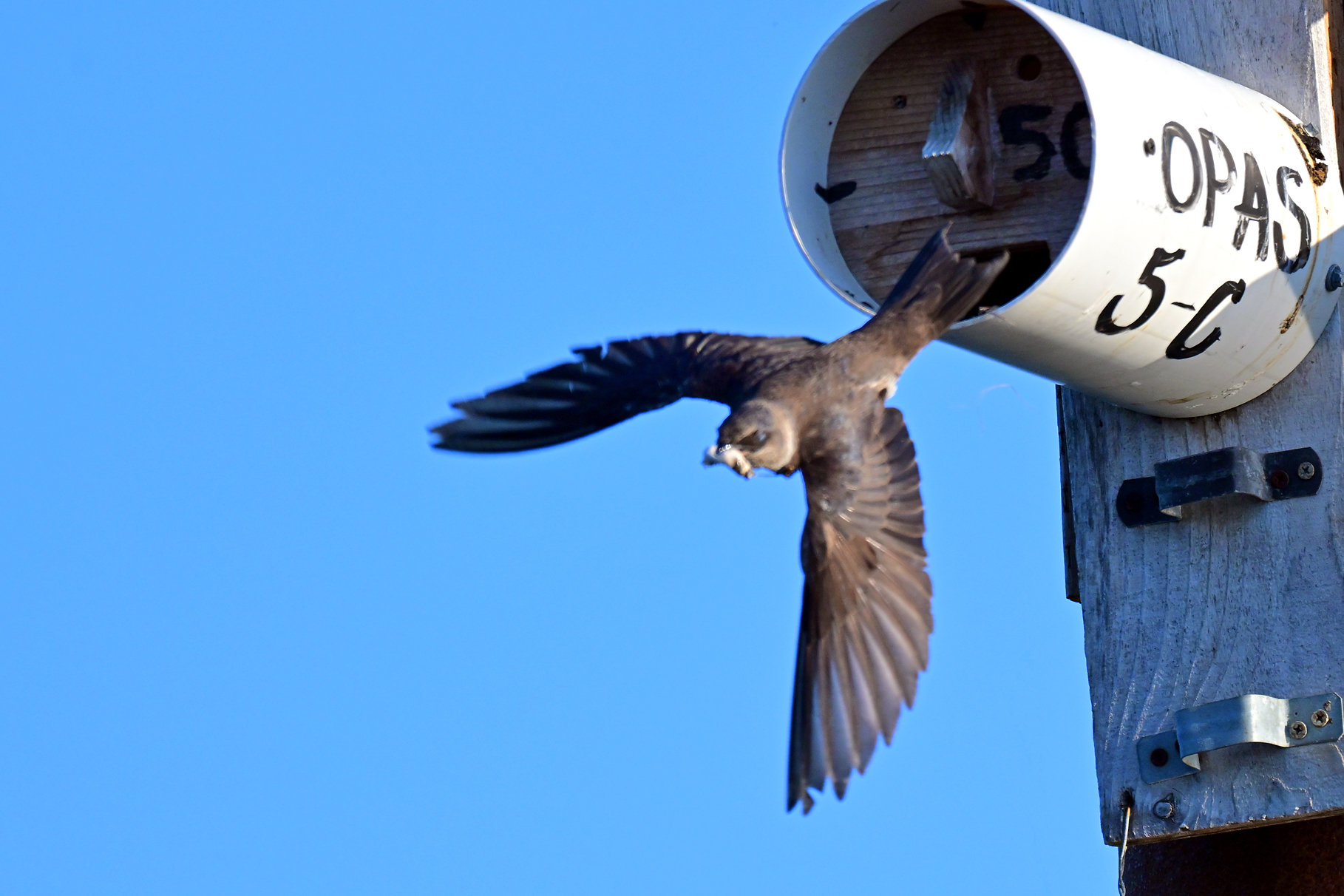

OPAS 5C

Purple Martin mother removing fecal sac from Box 5C at 3 Crabs. 9/8/2026
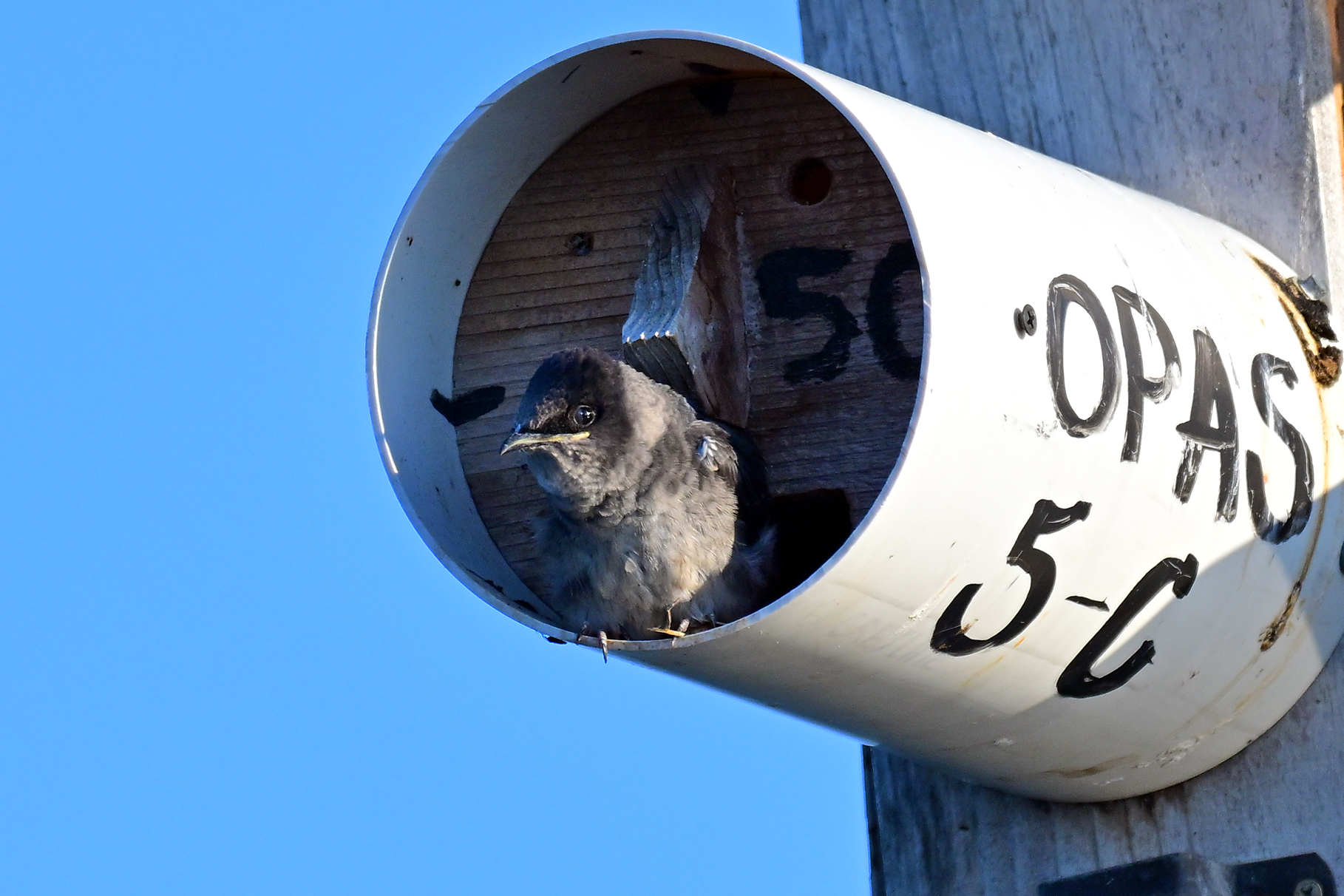

OPAS 5C

Purple Martin fledgling about to leave Box 5C at 3 Crabs. 9/8/2026
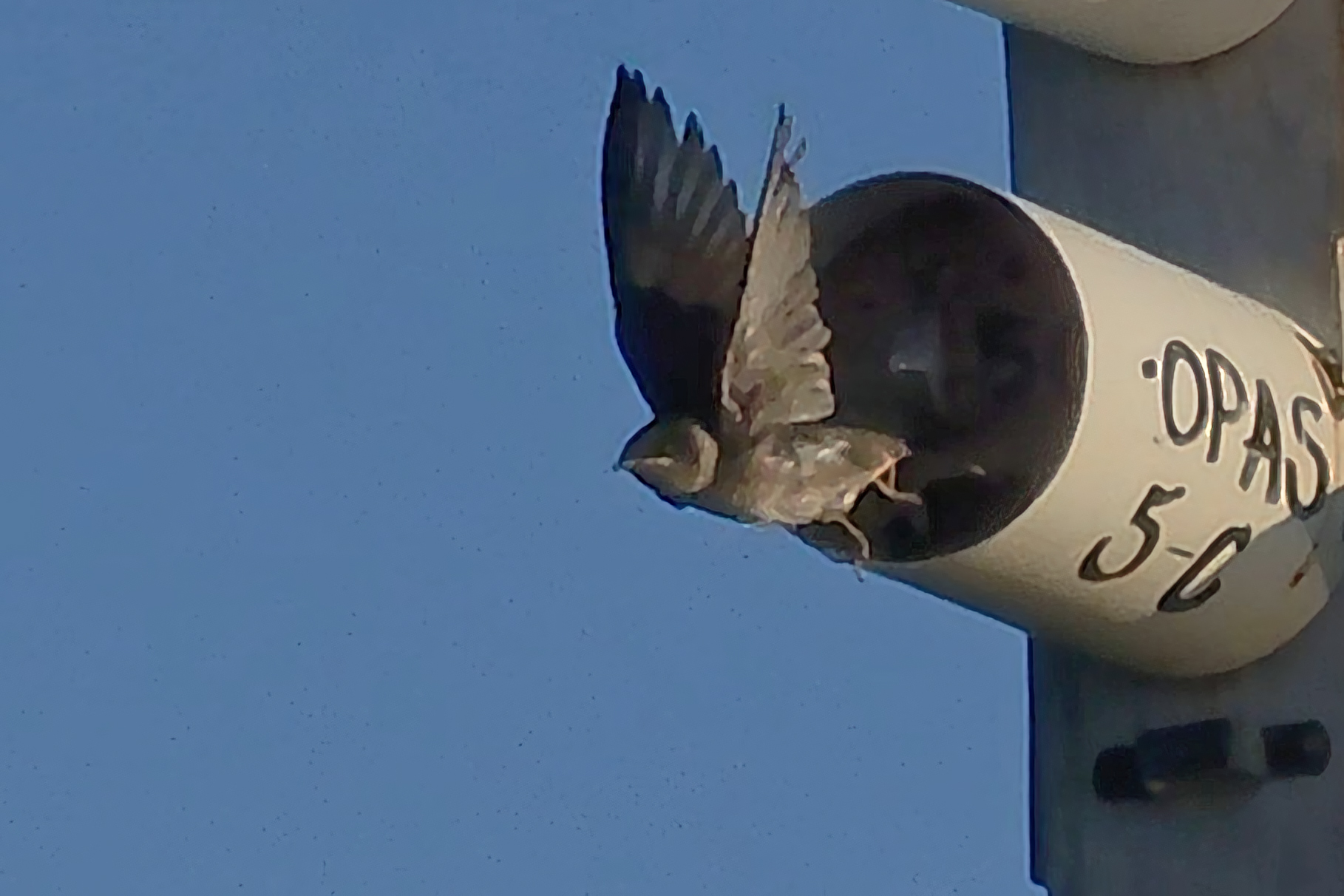

OPAS 5C

Purple Martin fledgling leaving Box 5C at 3 Crabs. 9/8/2026


At 7:50am on September 9th mom was flying around calling to her chicks to wake up and get out of bed.
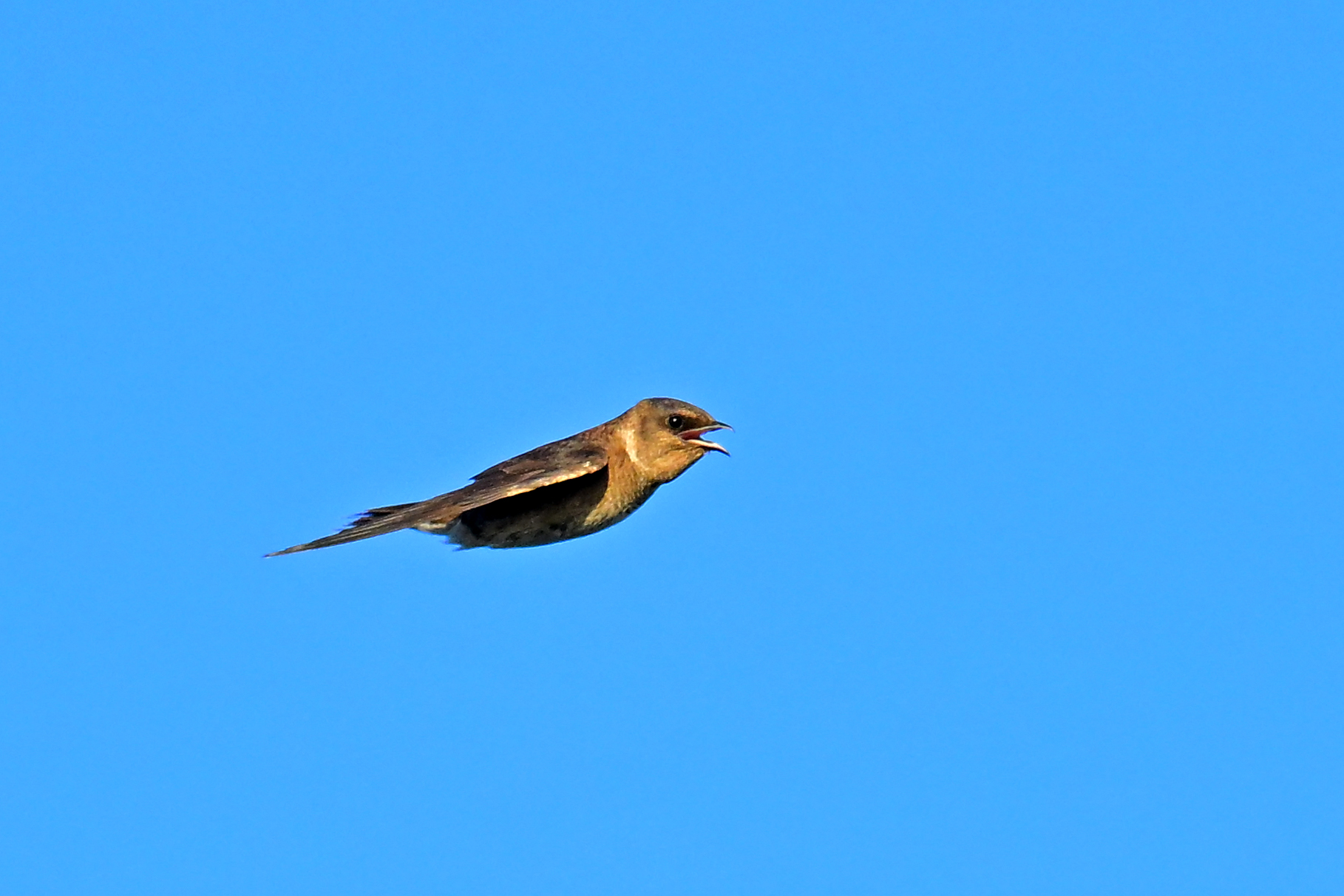
OPAS 5C

Mother Purple Martin calling her chicks in Box 5C at 3 Crabs. 9/9/2026


At 8:05am on September 9th both chicks were crowding each other at the door to the nest. One joined her shortly after but the other stayed in.
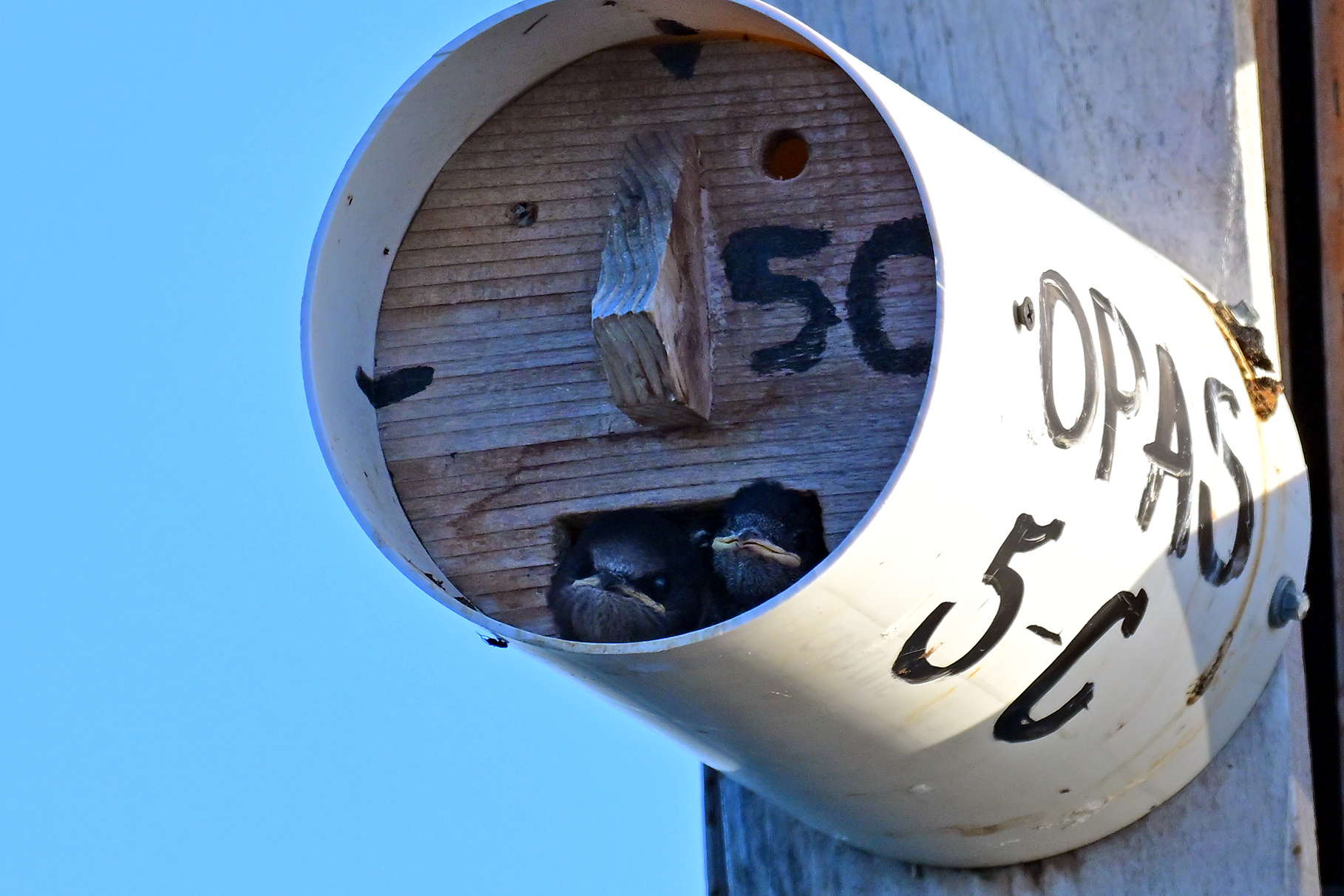
OPAS 5C

Purple Martin chicks in Box 5C at 3 Crabs. 9/9/2026


At 5:00pm on September 10th both chicks out of the nest
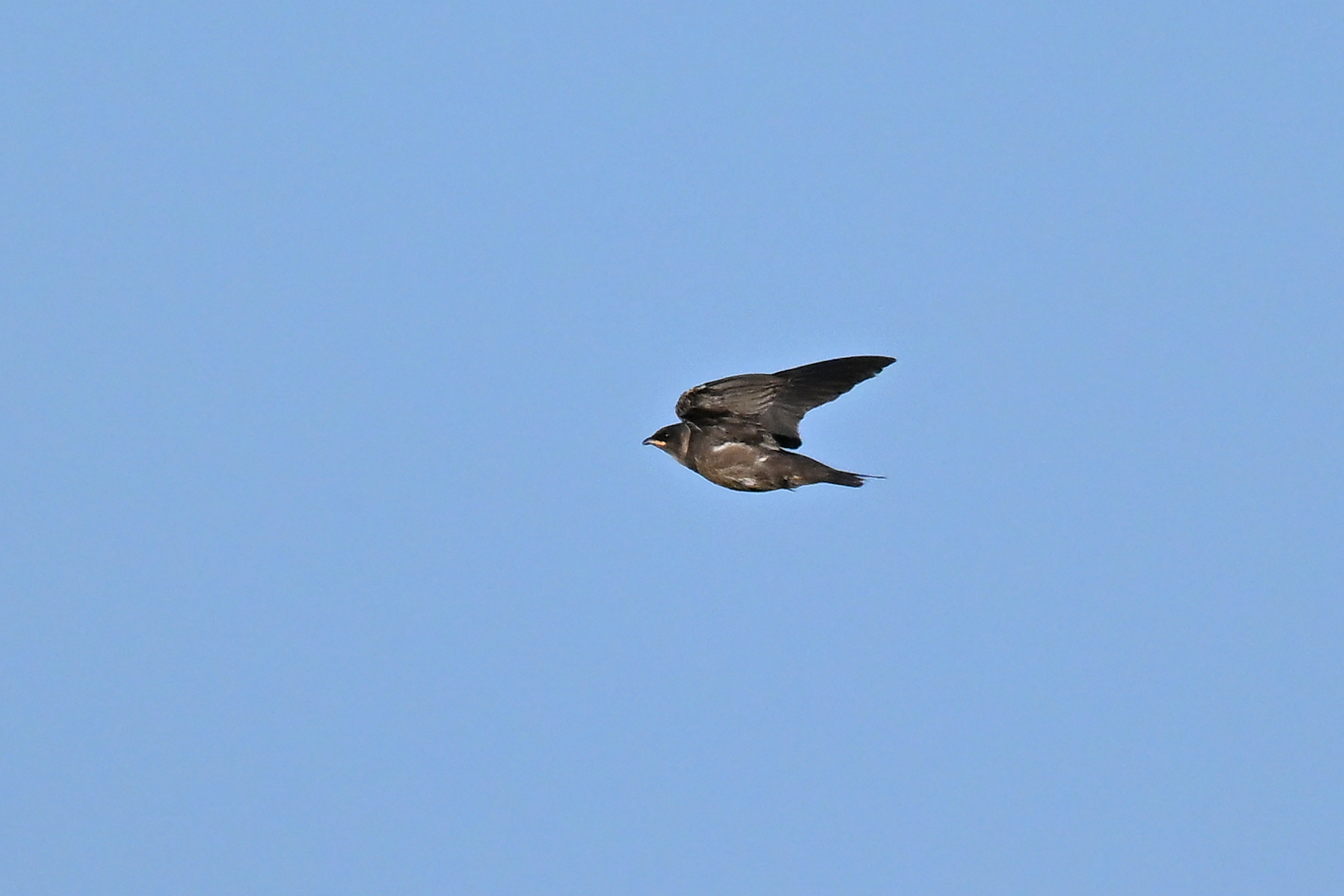
OPAS 5C

Purple Martin fledgling from Box 5C at 3 Crabs. 9/10/2026


These martins roosted in the nest boxes for two more nights, and I found them there at sunrise. They left shortly after sunrise, and returned to the nest between 5:30-7:00pm. Then for two days I did not find them at sunrise, so they either left earlier or roosted elsewhere, but returned around 5:30pm and circled around the area calling to each other. I last saw them the evening of September 14th. However, a local birder posted a photo of one perched in a tree along the Dungeness River levee trail on the afternoon of September 15th. Finally, on September 18th, an anonymous eBirder posted a sighting of 2-3 martins on a power line across from Helen's Pond, just east of the 3 Crabs Estuary.
OPAS 5C

Purple Martin mom and fledglings from Box 5C at 3 Crabs. 6:21pm on 9/11/2026


August 14, 2026

This morning at 10:00, the OPAS PUMA Team conducted the fifth and final 2026 census of the 18 Purple Martin nests on the tide flats at 3 Crabs beach. Today, Ken and I were joined by Carrie, Dan, Dee Renee, and Len. It was 55 degrees with light wind and the tide was just below 0.0' and falling. Near perfect conditions for checking the nests.

I noticed the first fledglings perched on the post above Box 202 in the tidal lagoon on Sunday, July 26th. All chicks in the boxes over the tidal lagoon have now fledged. Many more fledglings were out of the nests on the tide flats this morning. Inside the boxes we found no eggs. We counted 15 chicks of various ages, from newly hatched to fledgling, in four nests over the tide flats. Our best, optimistic guess, is there were 36 fledglings out of the nest during our check. Adding these to at least six fledglings over the tidal lagoon, we've had 42 chicks fledge, and hopefully 15 more that were in the nests today. If those all fledge we estimate there were 18 breeding pair and 57 fledglings at 3 Crabs in 2026, compared to our estimate of 20 breeding pairs and 68 fledglings from these nests in 2025.

To see the census data from the June 14th, June 28th, July 16th, July 30th and August 14th surveys in a new window click: 2026 Purple Martin Census. Hint: If possible, drag the new window to the side so you can see the table while you look at each photo.

To see the June 14th photos in a new window click: June 14, 2026.

To see the June 28th photos in a new window click: June 28, 2026.

To see the July 16th photos in a new window click: July 16, 2026.

To see the July 16th photos in a new window click: July 30, 2026.

When I first started putting the above links to each previous survey here, it seemed like a good way to quickly check the changes in a nest from one survey to the next. But now, with five surveys, it is really tedious to use that method. So if you really want to see the changes in each nest from one survey to the next, click: All surveys.
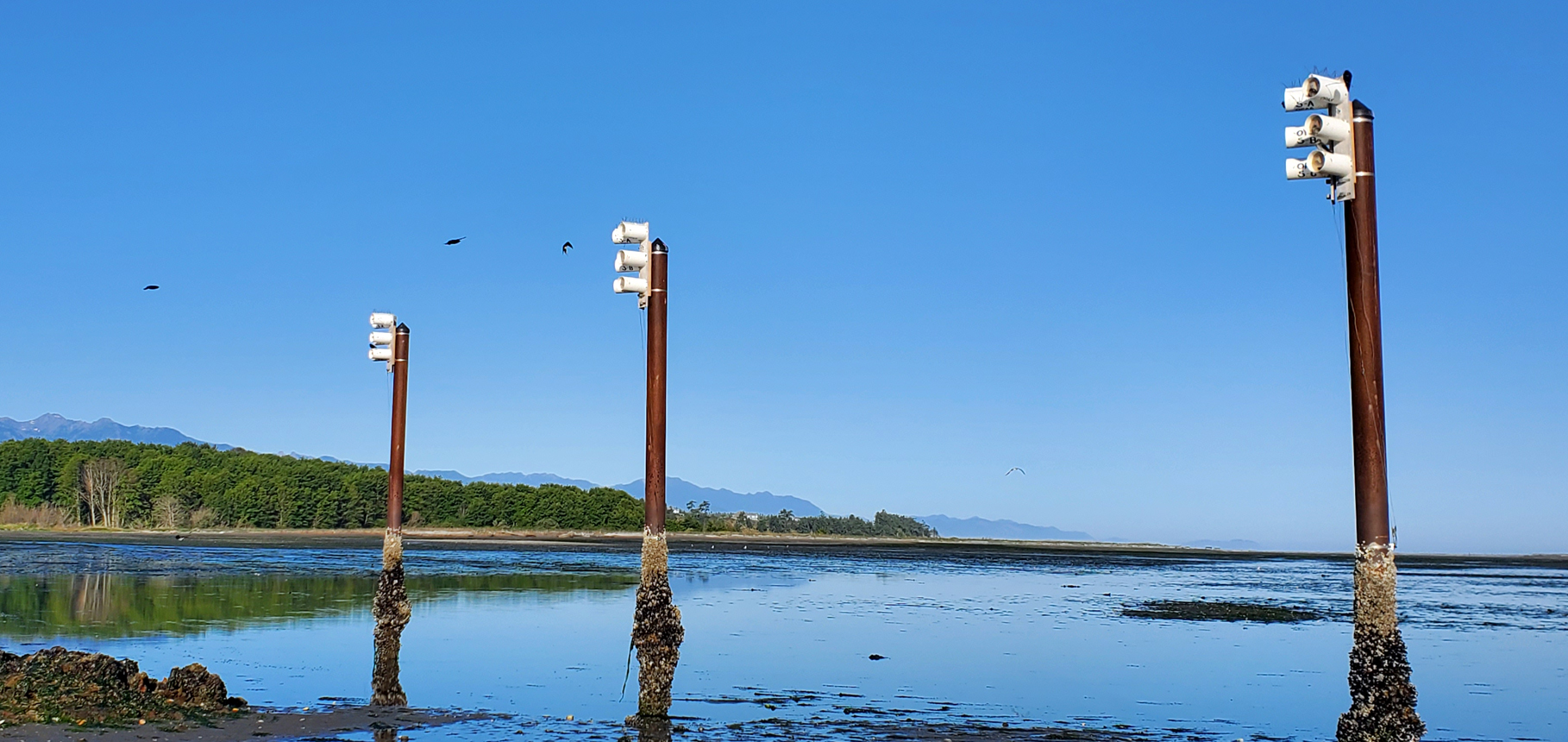

3 Crabs PUMA check

The 18 nest boxes are mounted at the top of the three pilings, about 15' above the sand.


To inspect a box, I lean a ladder against the piling, climb up about 10', and insert an endoscope through a small hole in the front of the nest box. I can view what the camera shows on my cell phone, and Ken and the rest of the team can view it on their mobile devices from the ground below. If I place the ladder correctly, I can insert the endoscope into all six nest boxes on the piling. I quickly take pictures, then move to the next piling. So we only disturb the birds for 3-5 minutes at each piling.
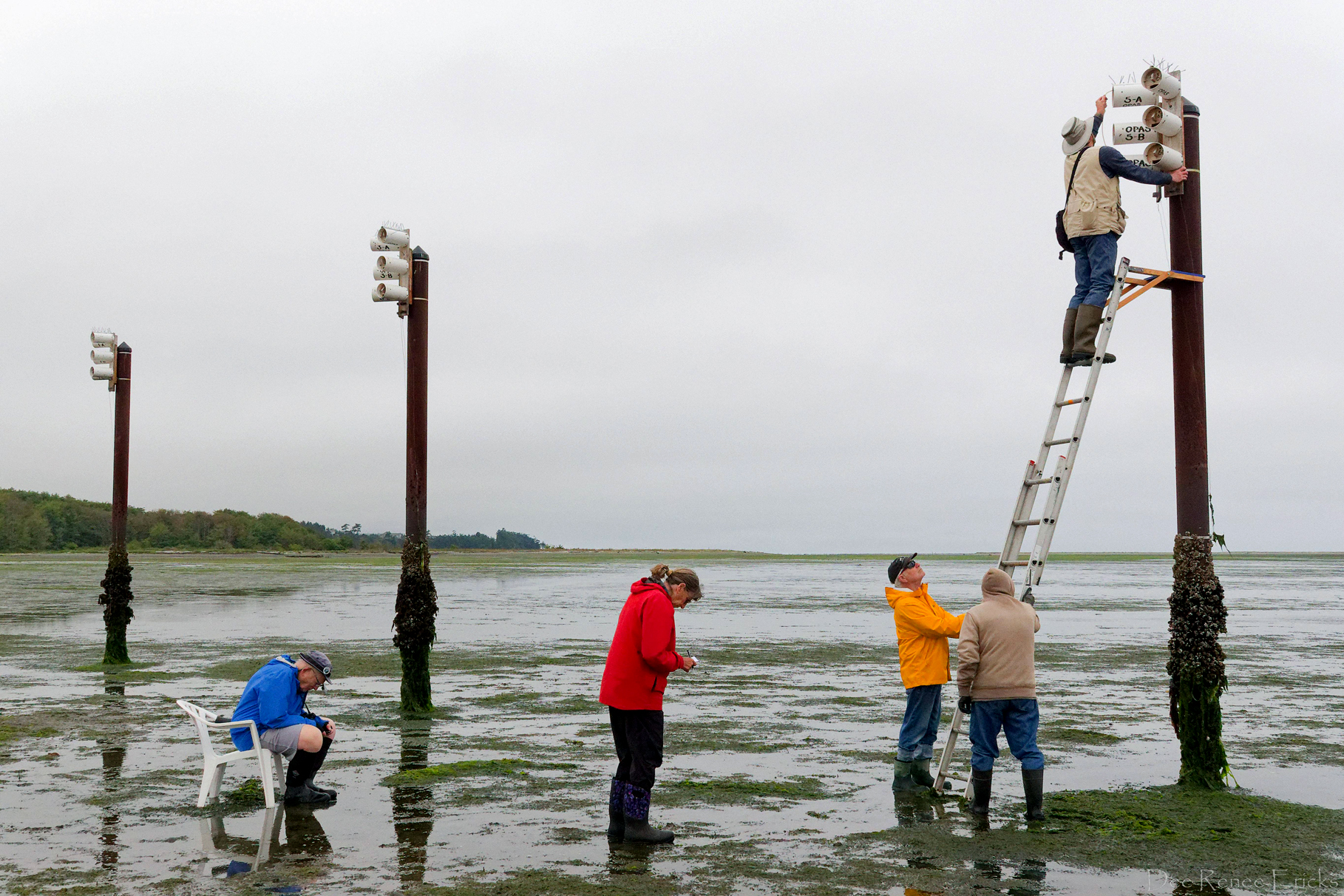
3 Crabs PUMA check

Here is closer view of this process. Ken sits on his throne looking at the endoscope images on his phone, while Carrie updates the spreadsheet as Ken and I tell her what we are seeing in the nest. Len and Dan steady the ladder and hope I won't fall on them. Photo courtesy of Dee Renee Ericks. (8/14/2026)


To see a short (and silent) video of this process in a new window in your web browser click here. The video is 59 MB, so I don't recommend trying to play it on your cell phone. It takes about 15-20 seconds to load.


The "triplex" boxes are labeled nA, nB, nC, from top to bottom, so the first piling has 1A, 1B, 1C, 2A, 2B and 2C. The second and third pilings continue the numbering system. We write the box numbers at the back of the nest box to make it easy to identify the box from the photo.

Purple Martins typically lay 4-6 eggs, one per day, generally in the morning. Incubation starts with the second to last egg, so the chicks all hatch within a day or two of each other.

  • Egg size: 0.8-1.1" long; 0.6-0.8" wide
  • Incubation: 15-18 days
  • Fledging: 26-36 days

Below are the endoscope photos of each nest.
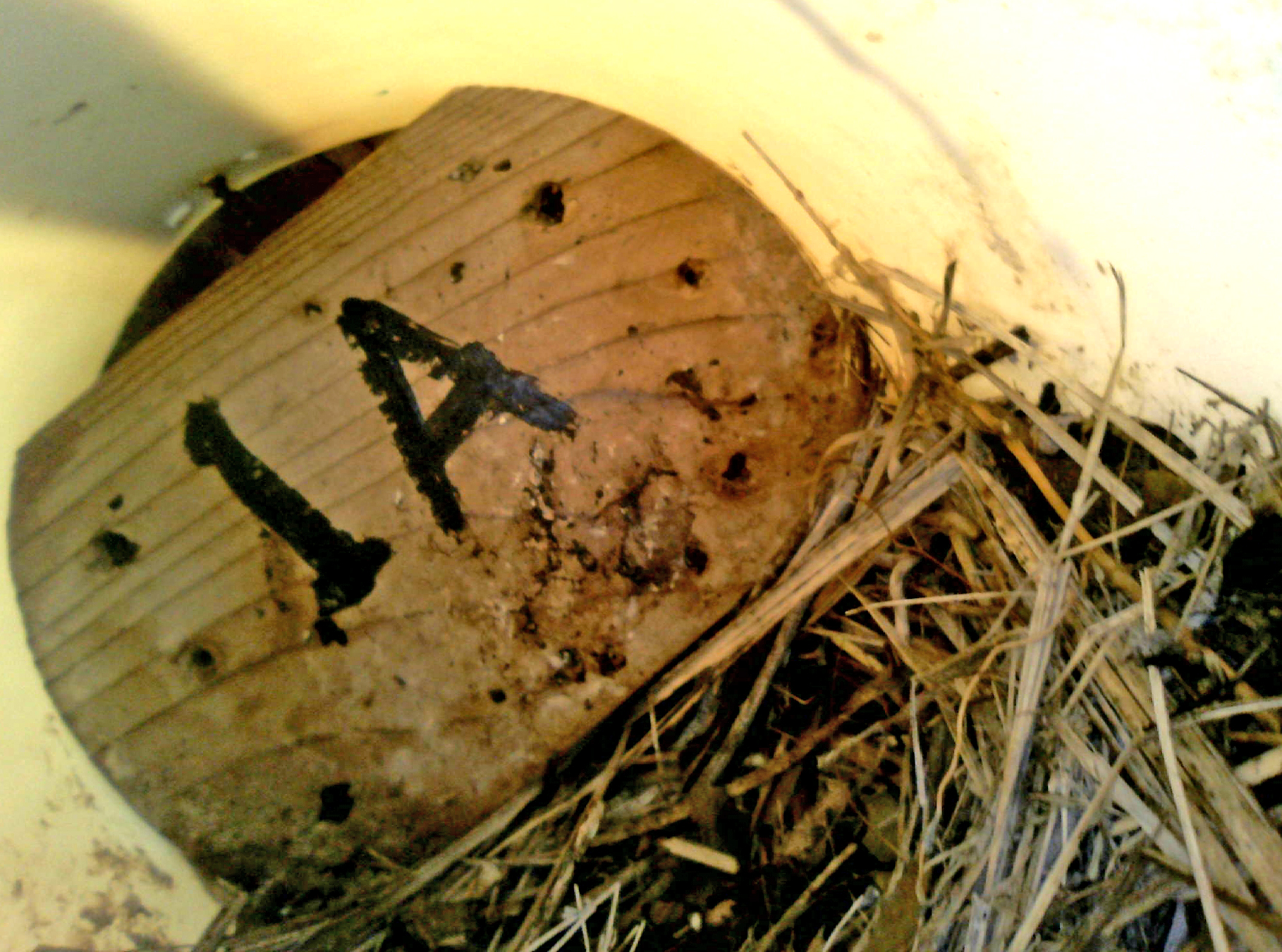
OPAS 1A

Purple Martin Box 1A at 3 Crabs. 8/14/2026

This is very discouraging. On June 28th there were five freshly laid eggs in a clean nest. On July 16 there are only dead chicks in a very messy nest. On July 30th the dead chicks were gone and some work had been done on the nest, but there were no new eggs. The nest appears to be the same today.
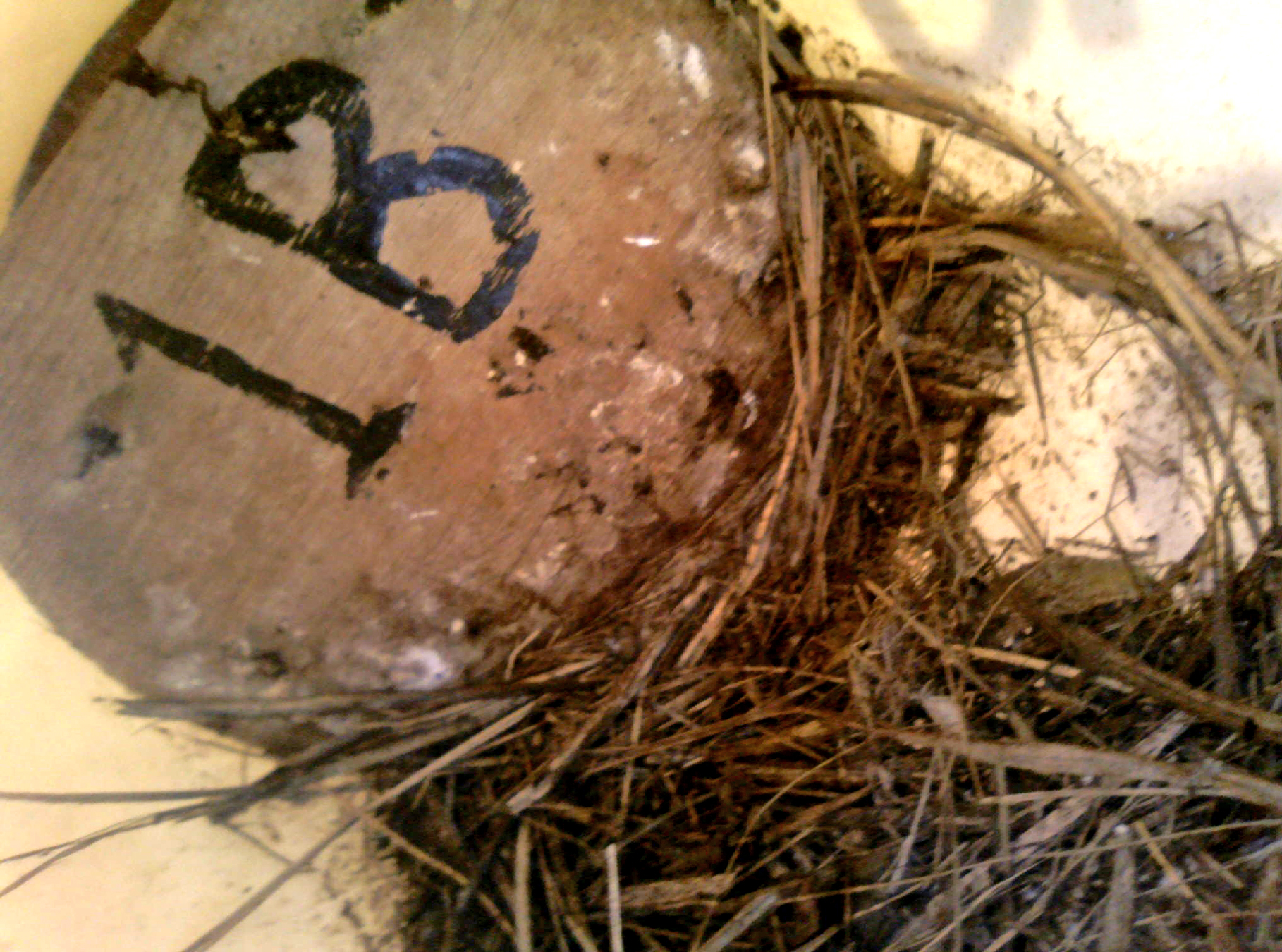

OPAS 1B

Purple Martin Box 1B at 3 Crabs. 8/14/2026

All five eggs we found on June 28th hatched, and the chicks looked healthy on July 16th. On July 30th we found only three chicks that looked close to fledging and we assumed the other two had recently fledged. Today the nest is empty.
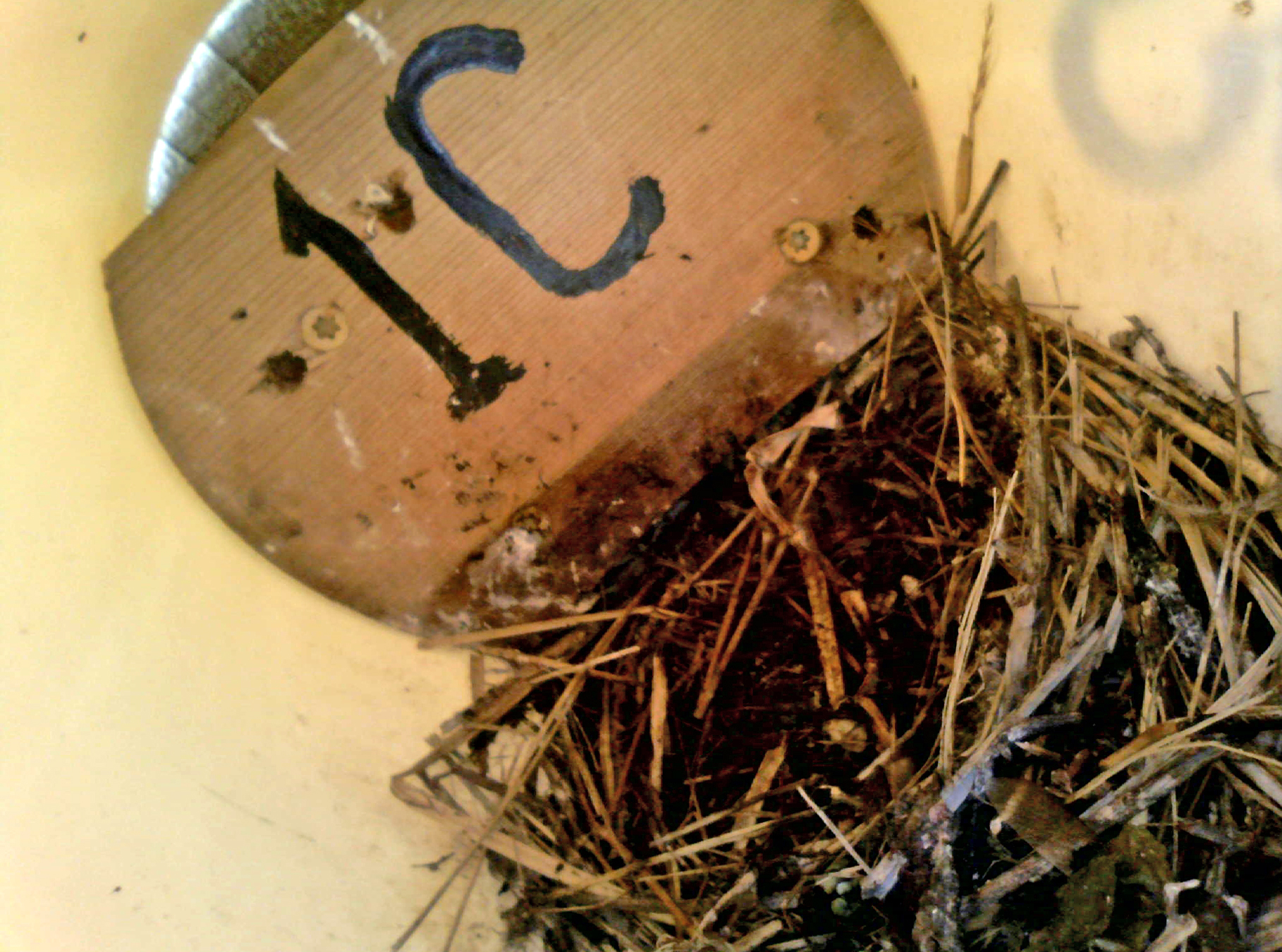


OPAS 1C

Purple Martin Box 1C at 3 Crabs. 8/14/2026

This nest presents another mystery. There were two eggs on June 28th and four on July 16th. On July 30th there were only two chicks that appeared to be only 3-4 days old, and no eggs. Today the nest is empty and there are no dead chicks in it. Since the chicks that were there on July 30th couldn't be more than 20 days old today, we assume they died and were removed from the nest.
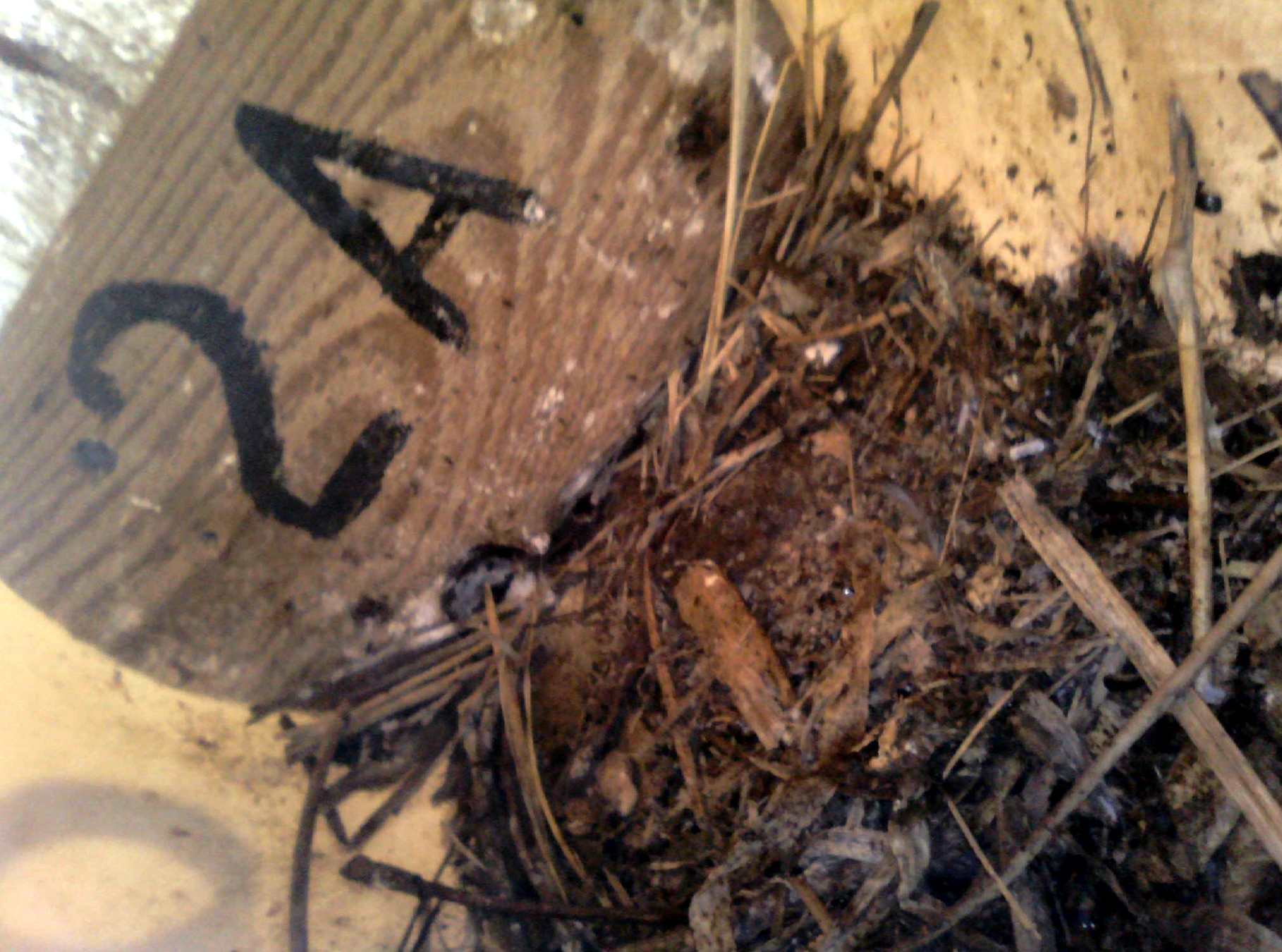


OPAS 2A

Purple Martin Box 2A at 3 Crabs. 8/14/2026

On July 16th we noted that four of the five eggs from June 28th had hatched, and the chicks looked a bit stressed. On July 30th there were clearly two fully feathered chicks that looked ready to fledge, but at least one dead chick in the nest. Today the nest empty and we assume the two chicks from July 30th fledged.
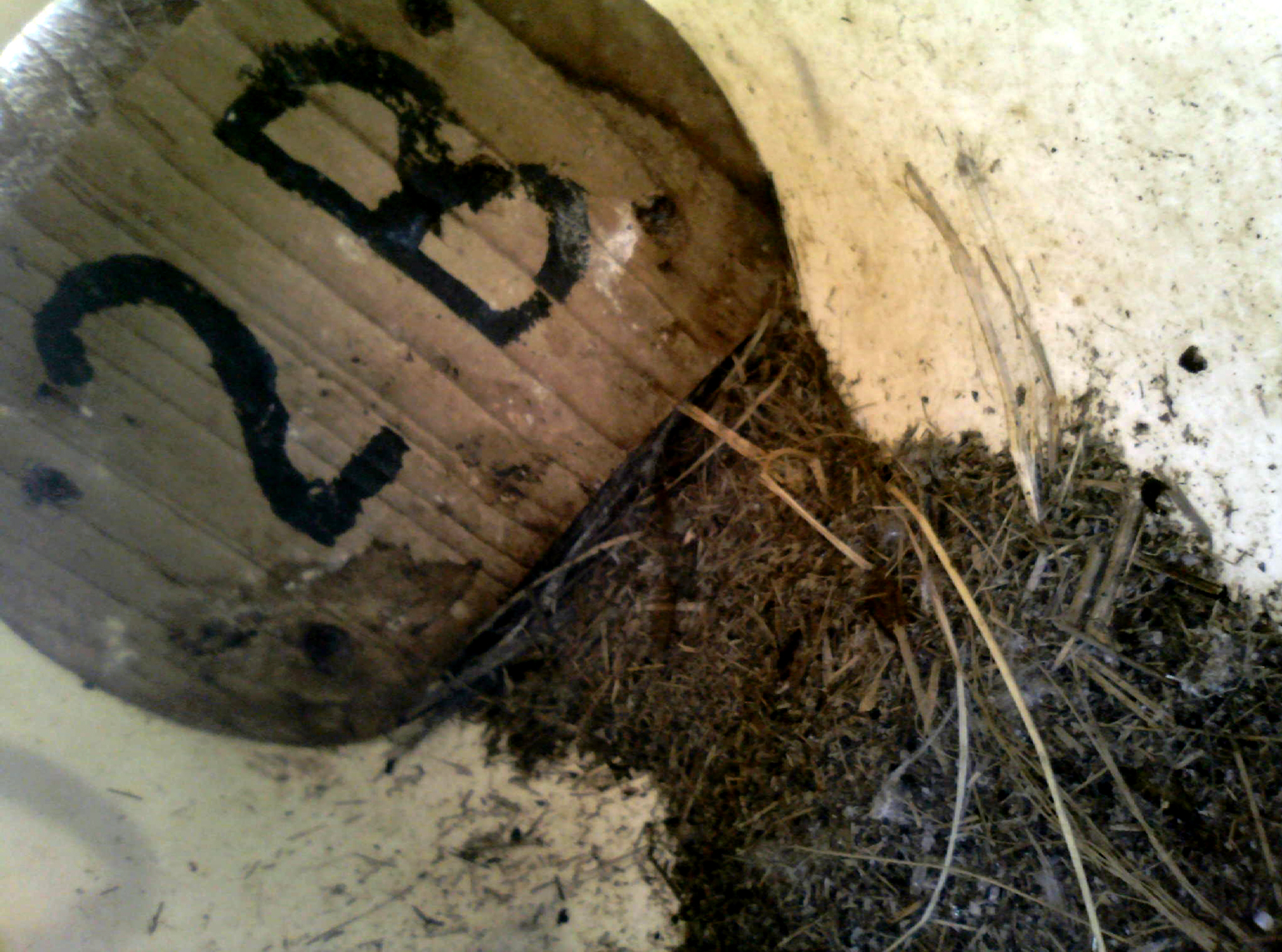

OPAS 2B

Purple Martin Box 2B at 3 Crabs. 8/14/2026

On July 16th there were three chicks in 2B, which matched the 3 eggs we had on June 14th. These are likely the first chicks at 3 Crabs this season. On July 30th we found two fully feathered chicks. These may have fledged and are just back in the nest resting. Today the nest is empty and we assume the two chicks present on July 30th have fledged.
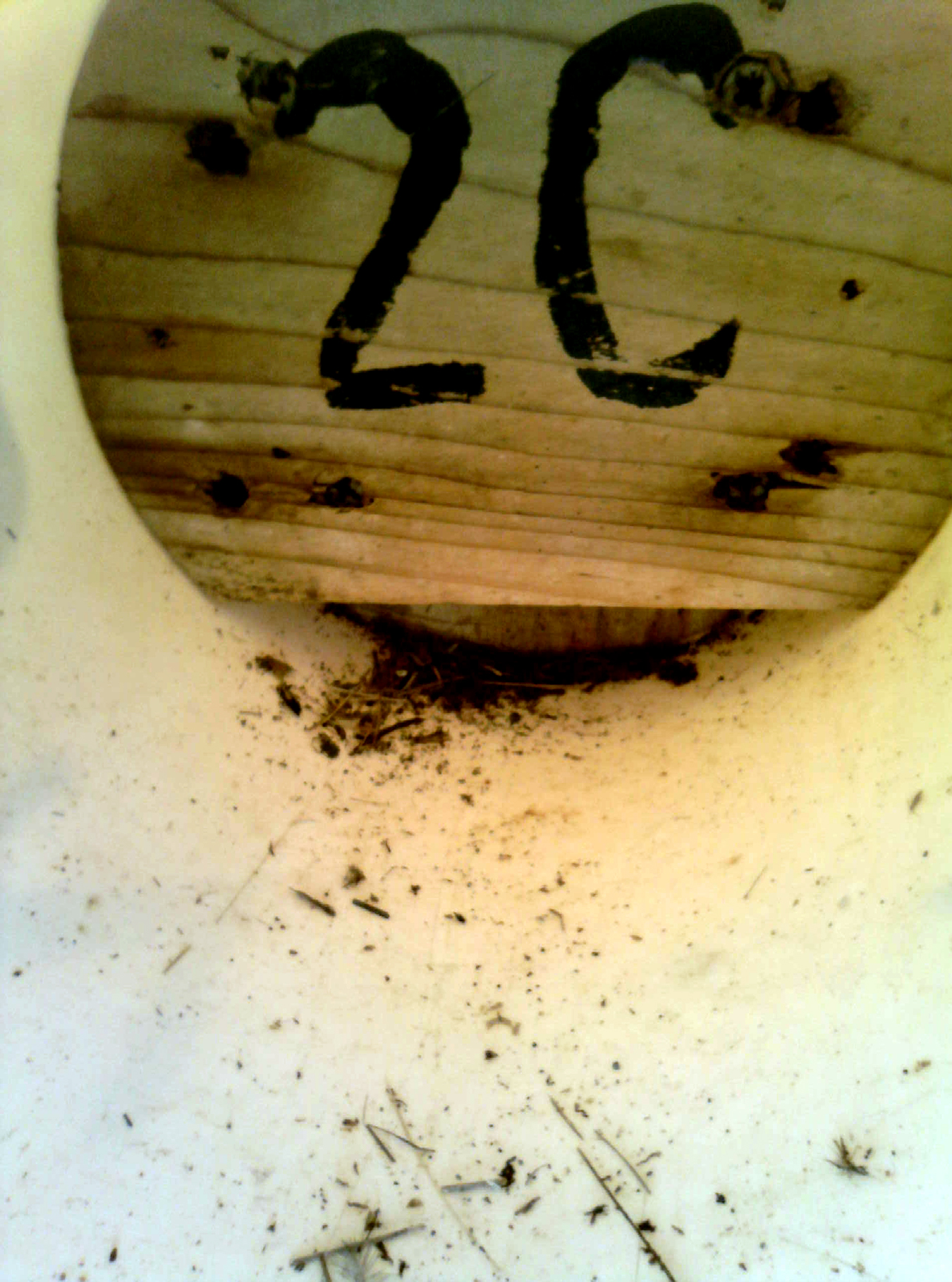

OPAS 2C

Purple Martin Box 2C at 3 Crabs. 8/14/2026

On July 16th there were three eggs that were laid after June 28th. On July 30th there were no eggs visible and one newly hatched chick on a bed of green leaves. Today the nest is completely bare. All nesting material and the chick are gone. The chick could not have fledged yet, so we assume it died.
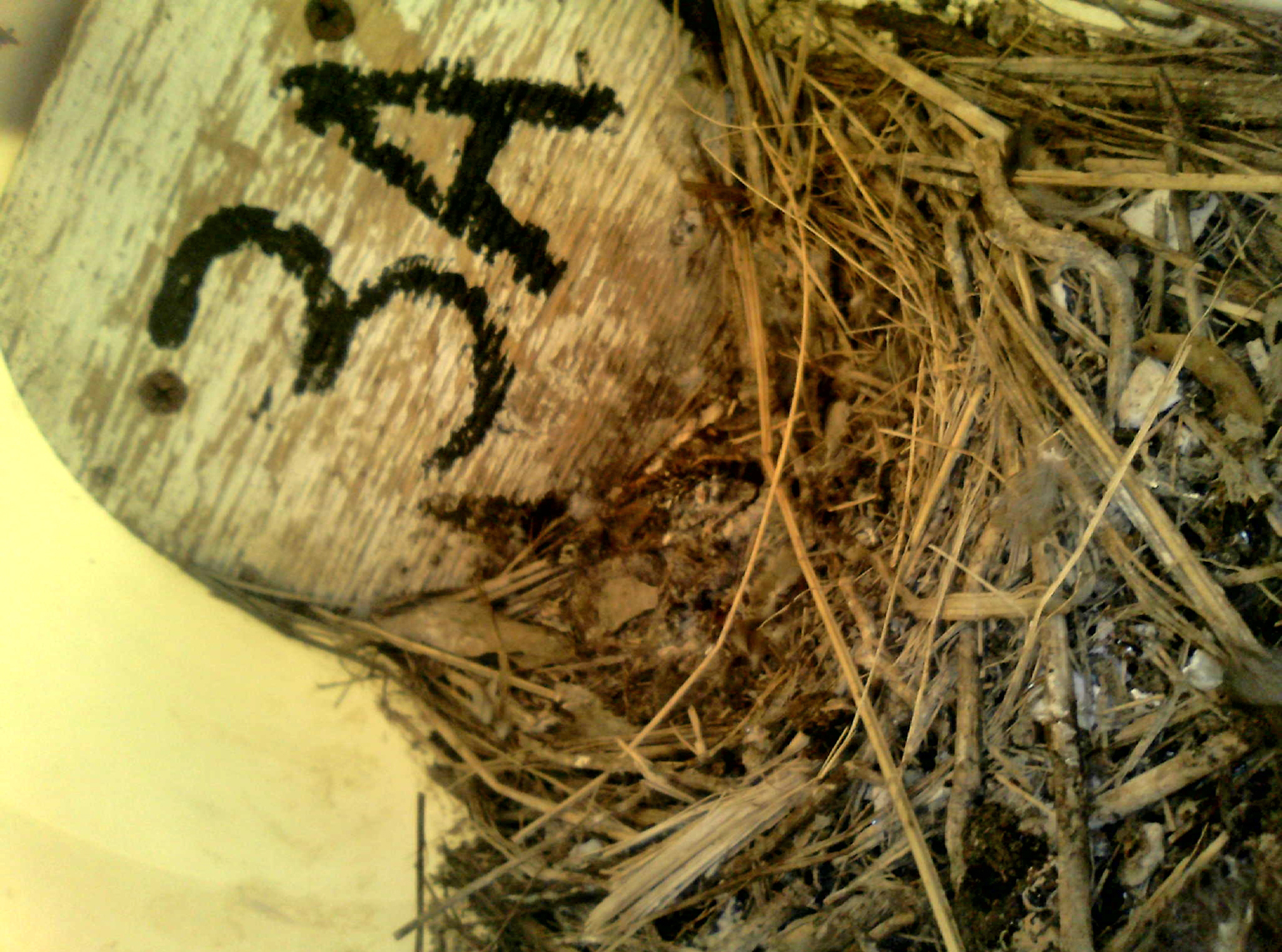

OPAS 3A

Purple Martin Box 3A at 3 Crabs. 8/14/2026

We believe the female in 3A laid her sixth egg early the morning of June 14th, and we found 4-6 newly hatched chicks on June 28th. On July 16 the chicks appeared to be least 18 days old. On July 30th the nest was empty and we assumed that all six chicks fledged successfully. We continue to believe that today.
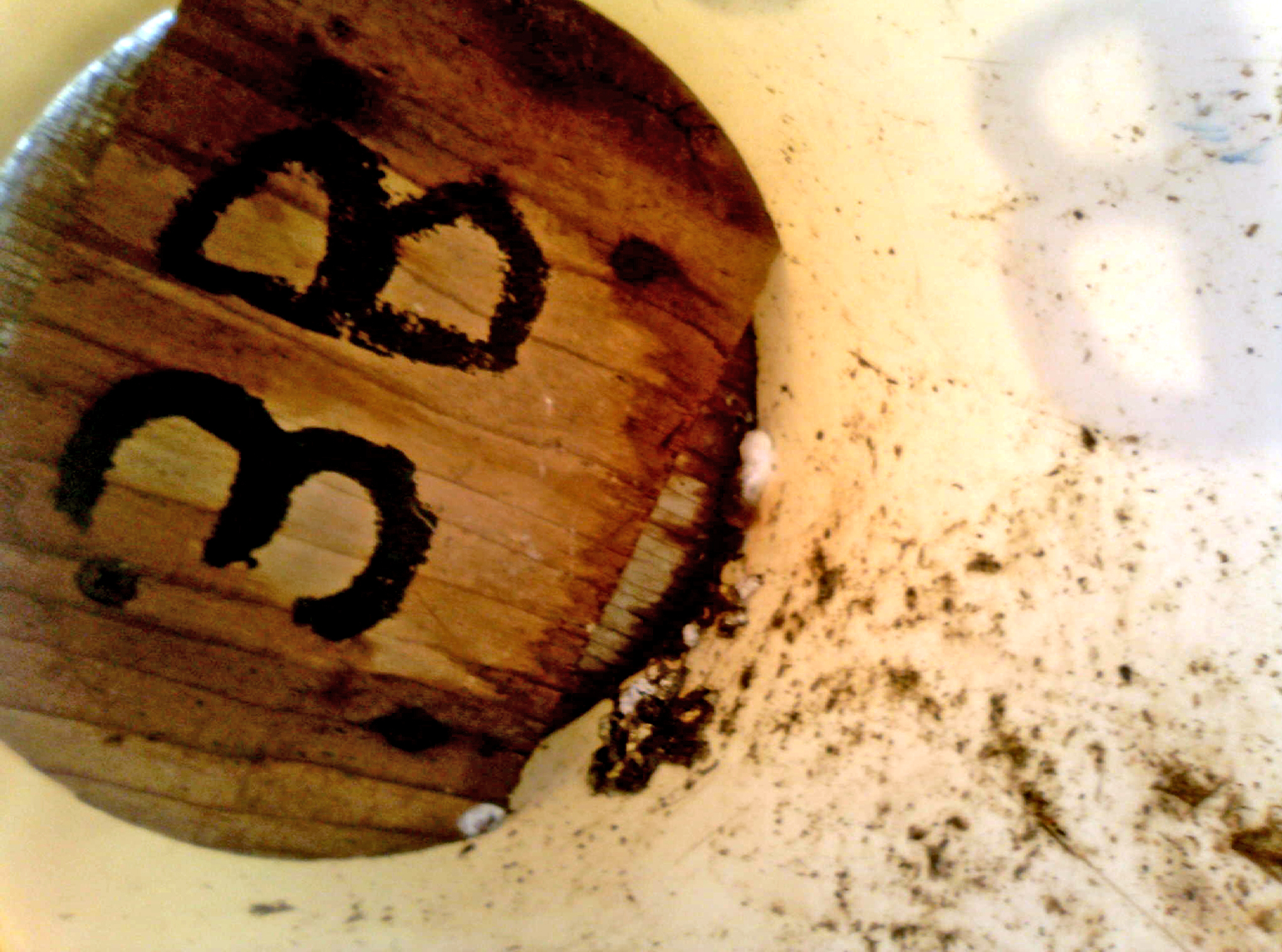

OPAS 3B

Purple Martin Box 3B at 3 Crabs. 8/14/2026

On June 14th, Box 3B had the start of a nest, with some green leaves indicating eggs were on the way. Not much change on June 28th, but on July 16th and July 30th this box was bare, as it is today. Sometimes PUMA will remove the nest material from one box to use in another.
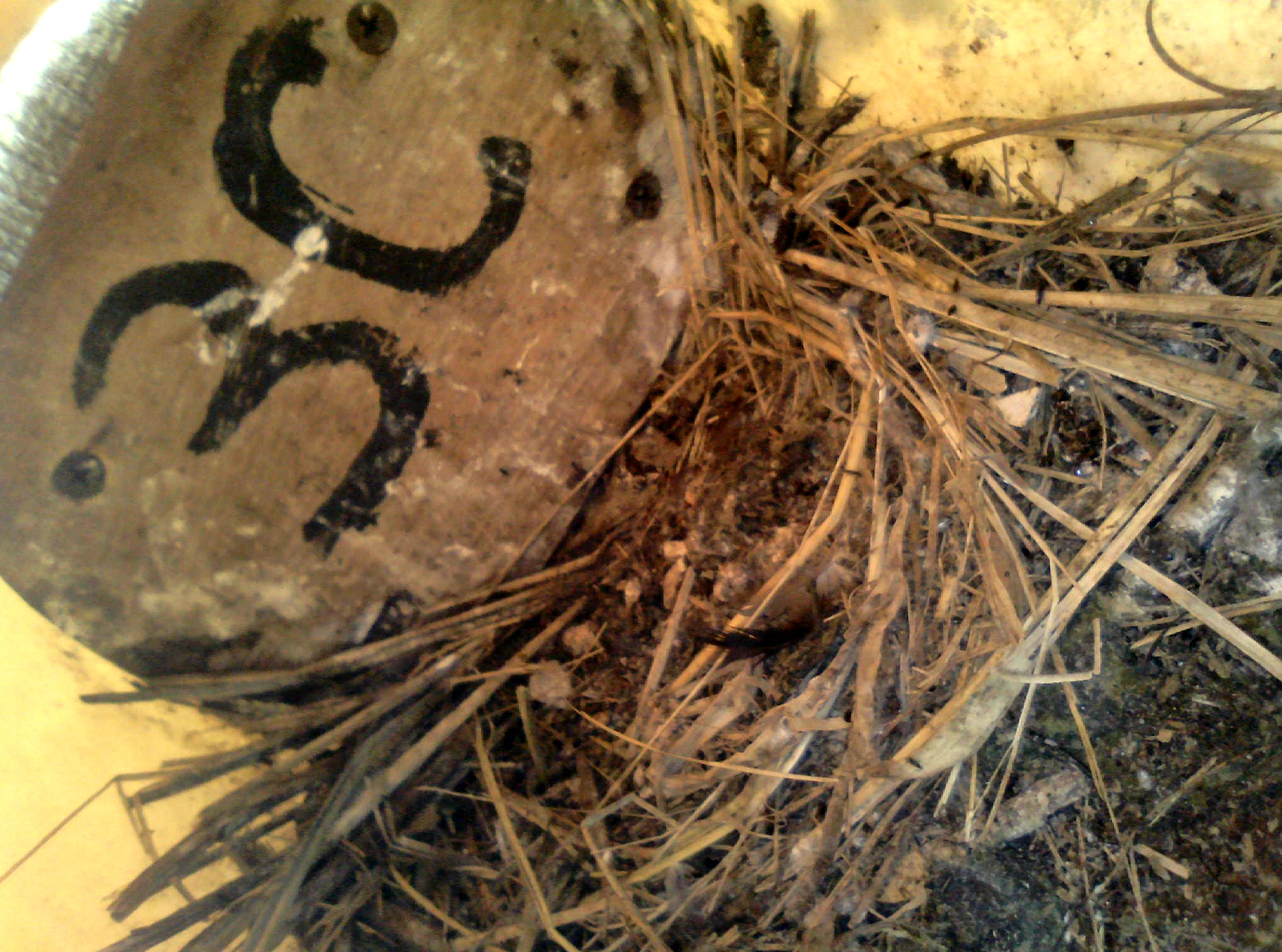

OPAS 3C

Purple Martin Box 3C at 3 Crabs. 8/14/2026

Box 3C had 5 eggs on June 28th, and five chicks on July 16th. On July 30th, three fully feathered chicks were visible, and possibly a fourth, although two may have fledged. Today the nest is empty and we assume all five chicks fledged successfully.
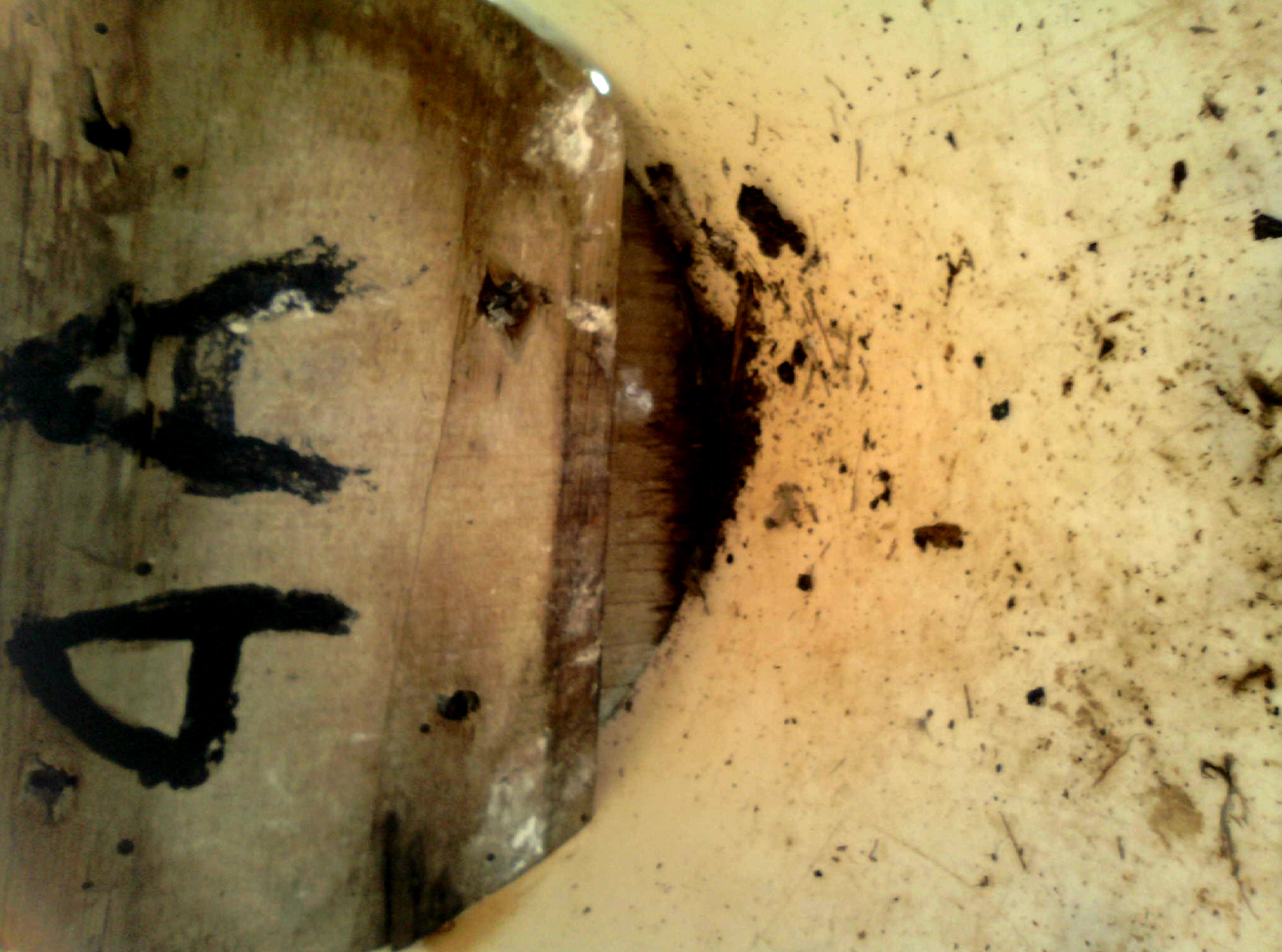

OPAS 4A

Purple Martin Box 4A at 3 Crabs. 8/14/2026

This is another mystery nest. Box 4A had five eggs on June 28th, all laid after our June 14th check. On July 16th there were two 7-day-old chicks and one egg that should have hatched already, On July 30th, Box 4A was bare, with all the nest material removed. It was too soon for those two chicks to have fledged, so we assume they did not survive. Today the box is still bare.
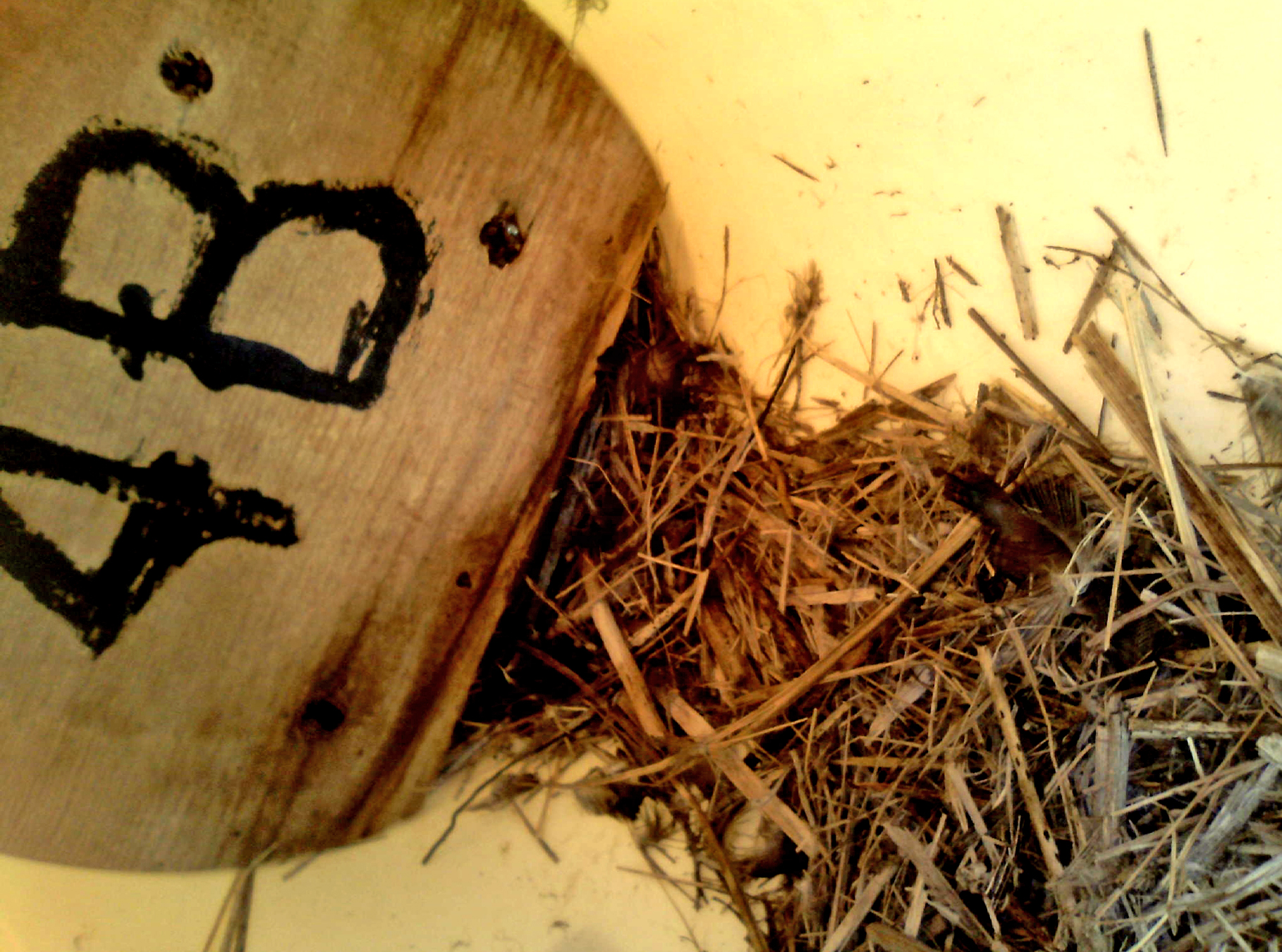

OPAS 4B

Purple Martin Box 4B at 3 Crabs. 8/14/2026

Box 4B is another one where a nest was started early but no eggs were ever laid.
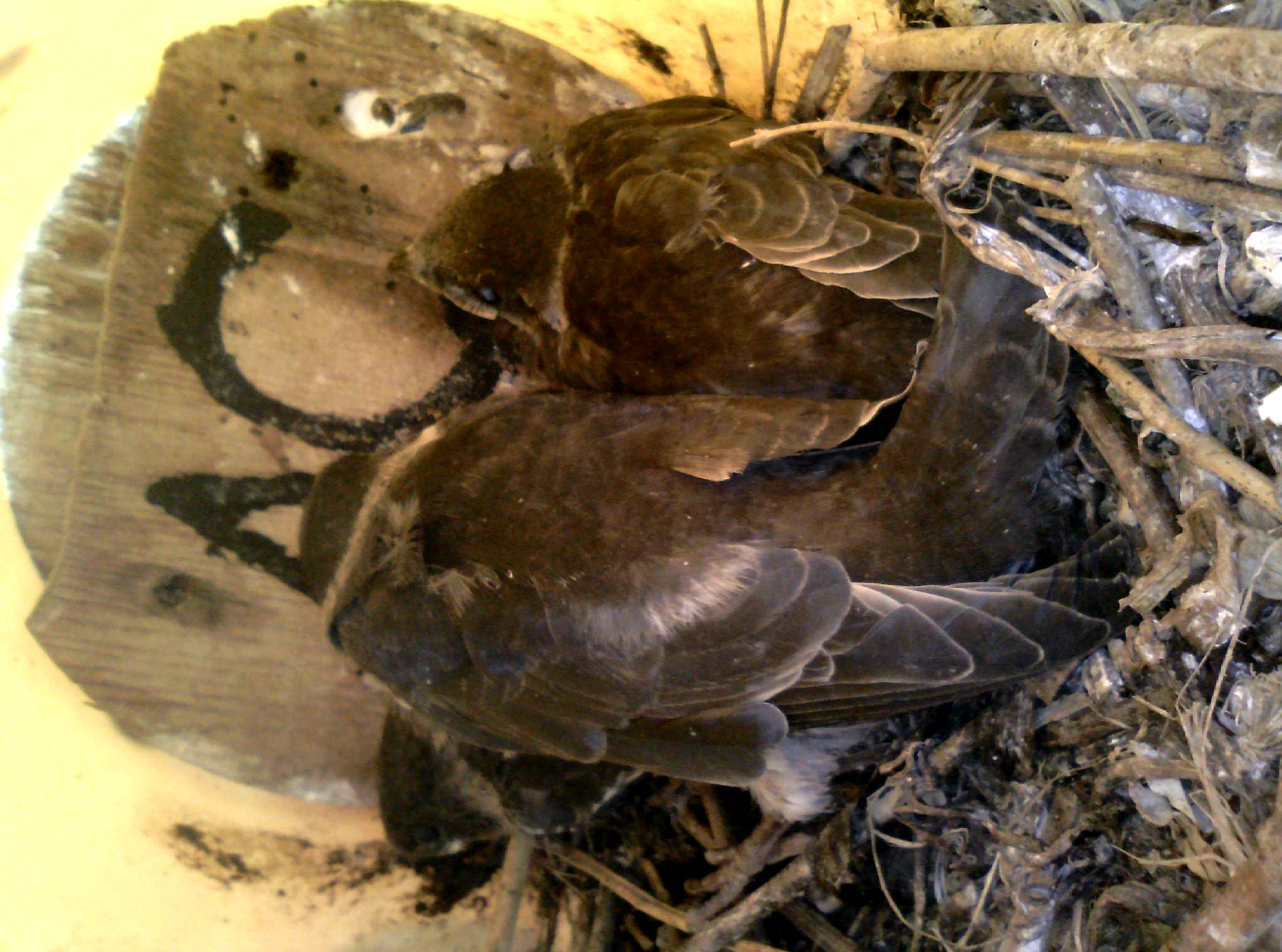

OPAS 4C

Purple Martin Box 4C at 3 Crabs. 8/14/2026

Four eggs from June 28th hatched but the 2-3-day old chicks looked a bit stressed on July 16th. On July 30th they looked healthy. Today they look like they may have fledged, but came back inside to stay warm.
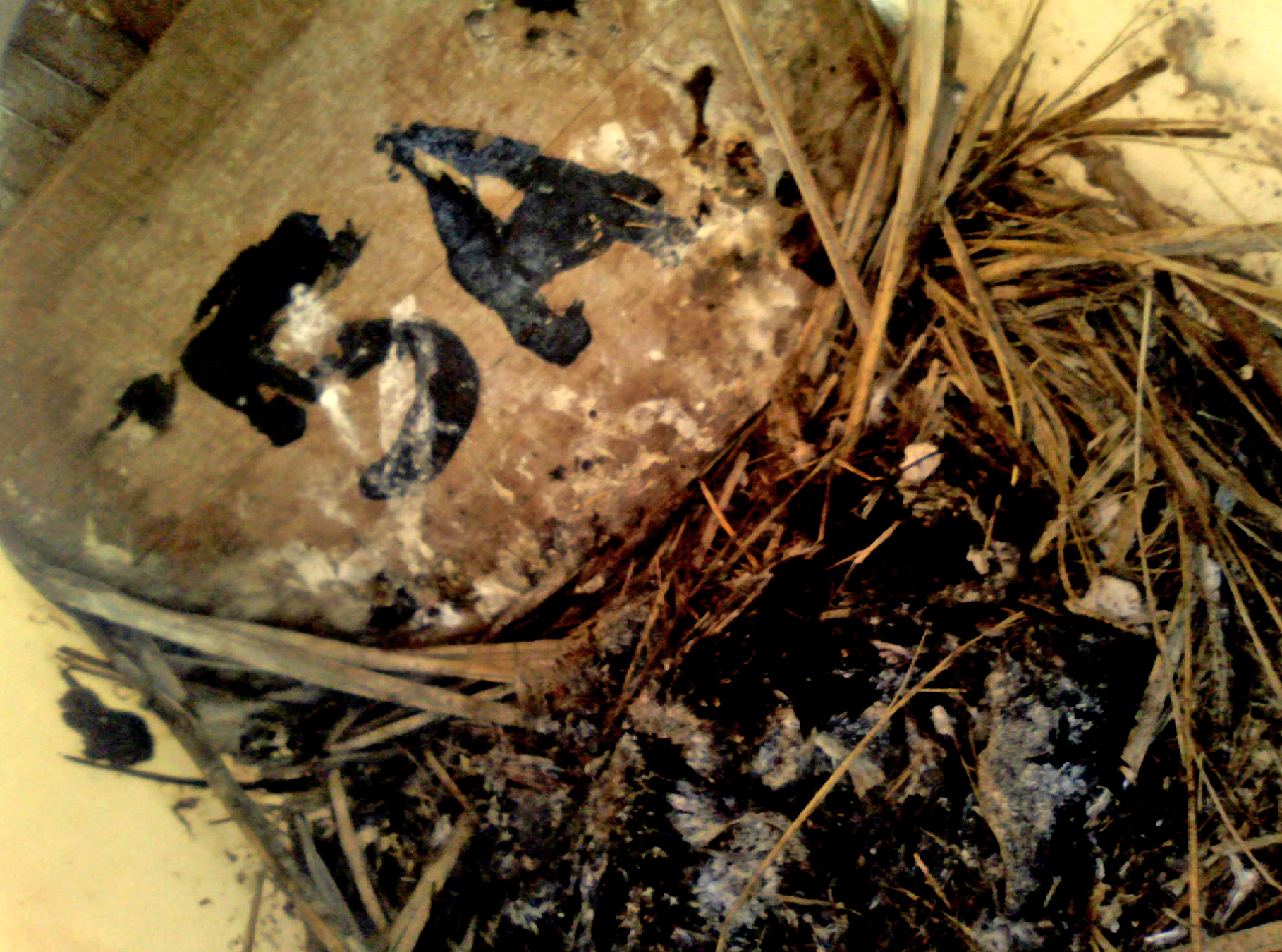

OPAS 5A

Purple Martin Box 5A at 3 Crabs. 8/14/2026

All five eggs in Box 5A on June 28th hatched and the chicks looked OK on July 16th. On July 30th there was one fully feathered chick that looked close to fledging, but there appeared to be one or more dead chicks in the nest. Today the nest is empty, and we assume the chick fledged.
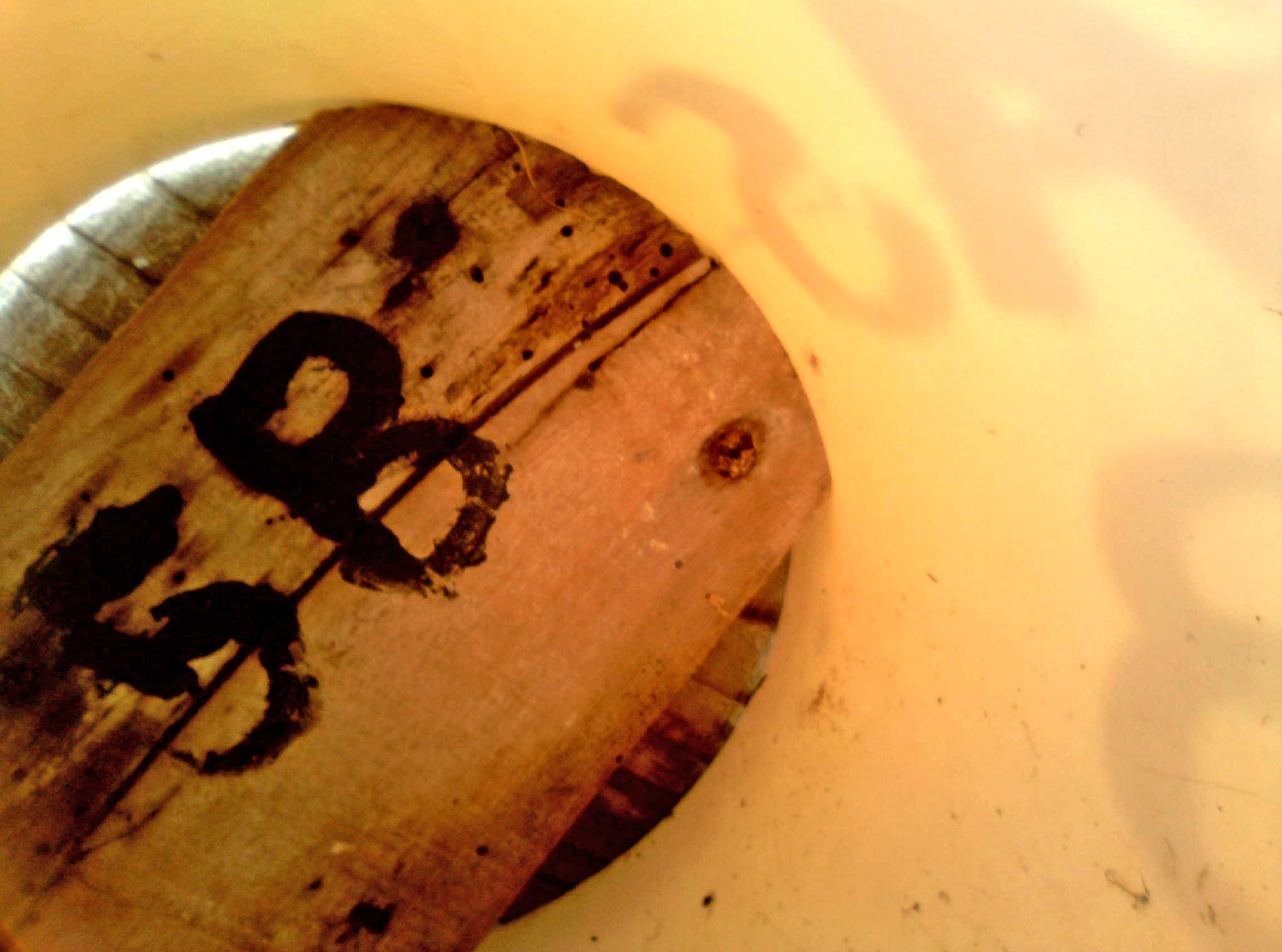

OPAS 5B

Purple Martin Box 5B at 3 Crabs. 8/14/2026

The grasses we primed Box 5B with were removed early in the season and this box has not been used other than for roosting.
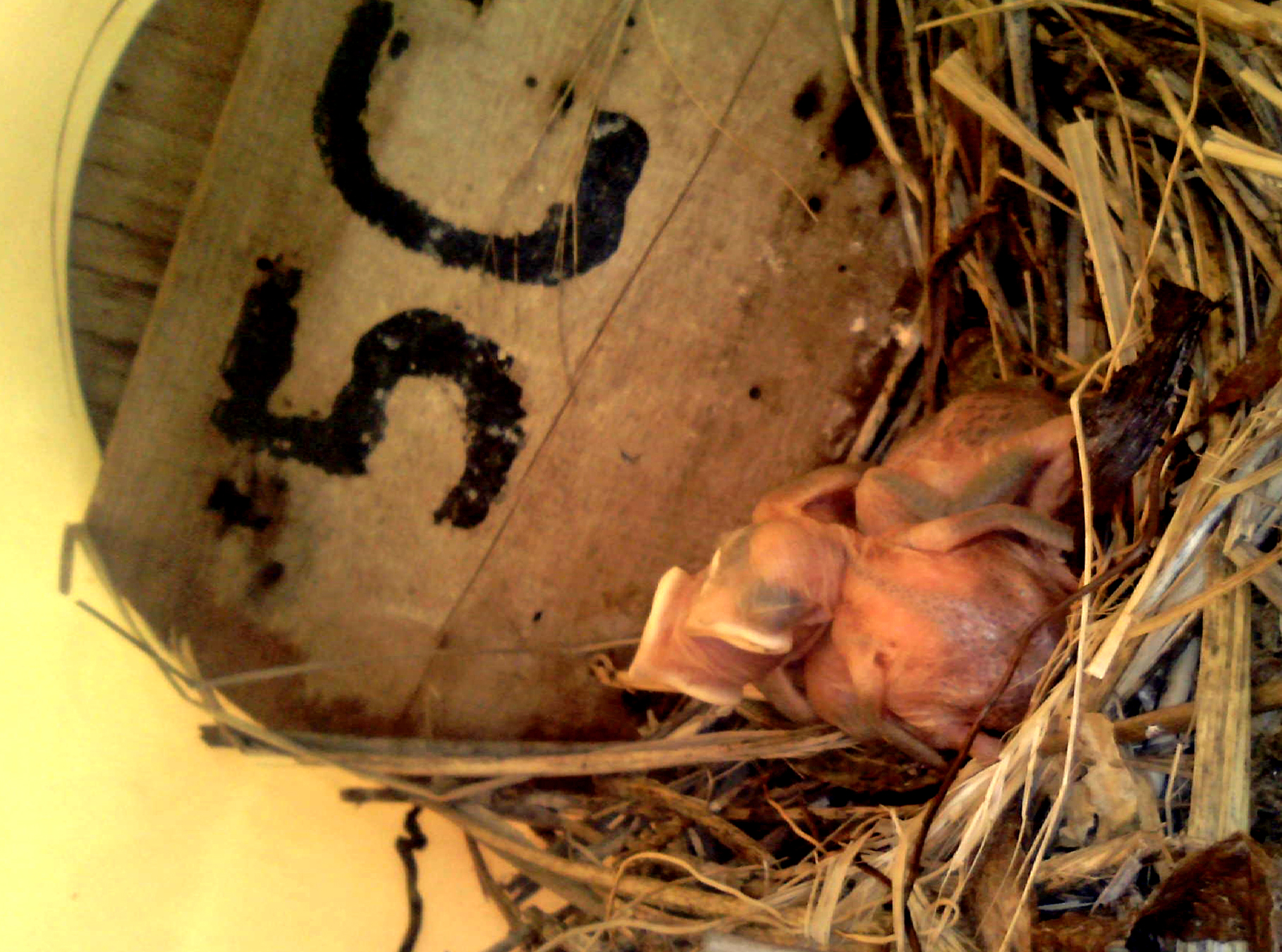

OPAS 5C

Purple Martin Box 5C at 3 Crabs. 8/14/2026

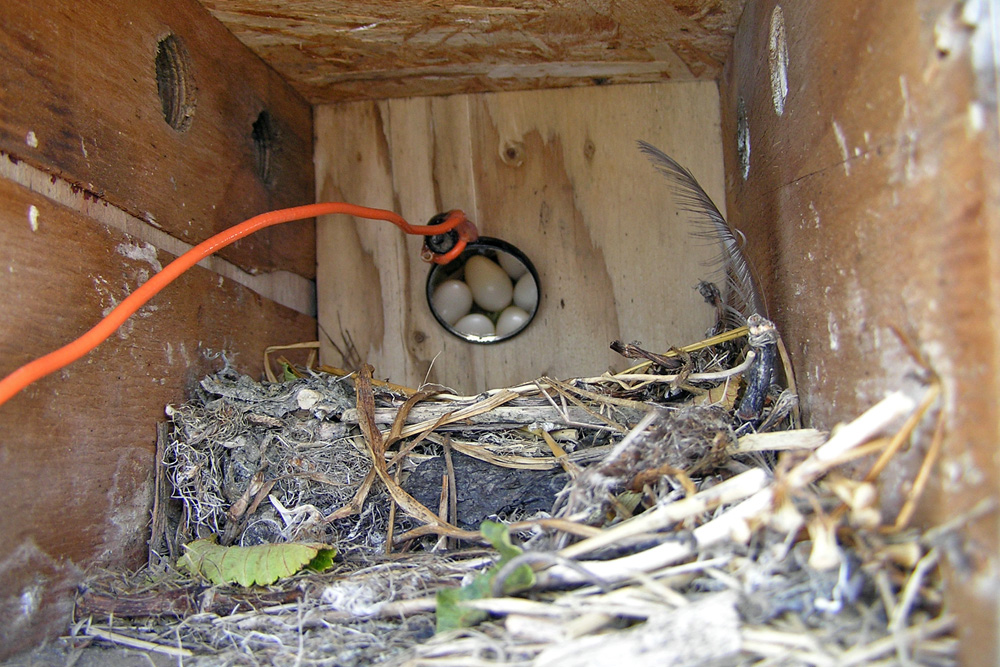
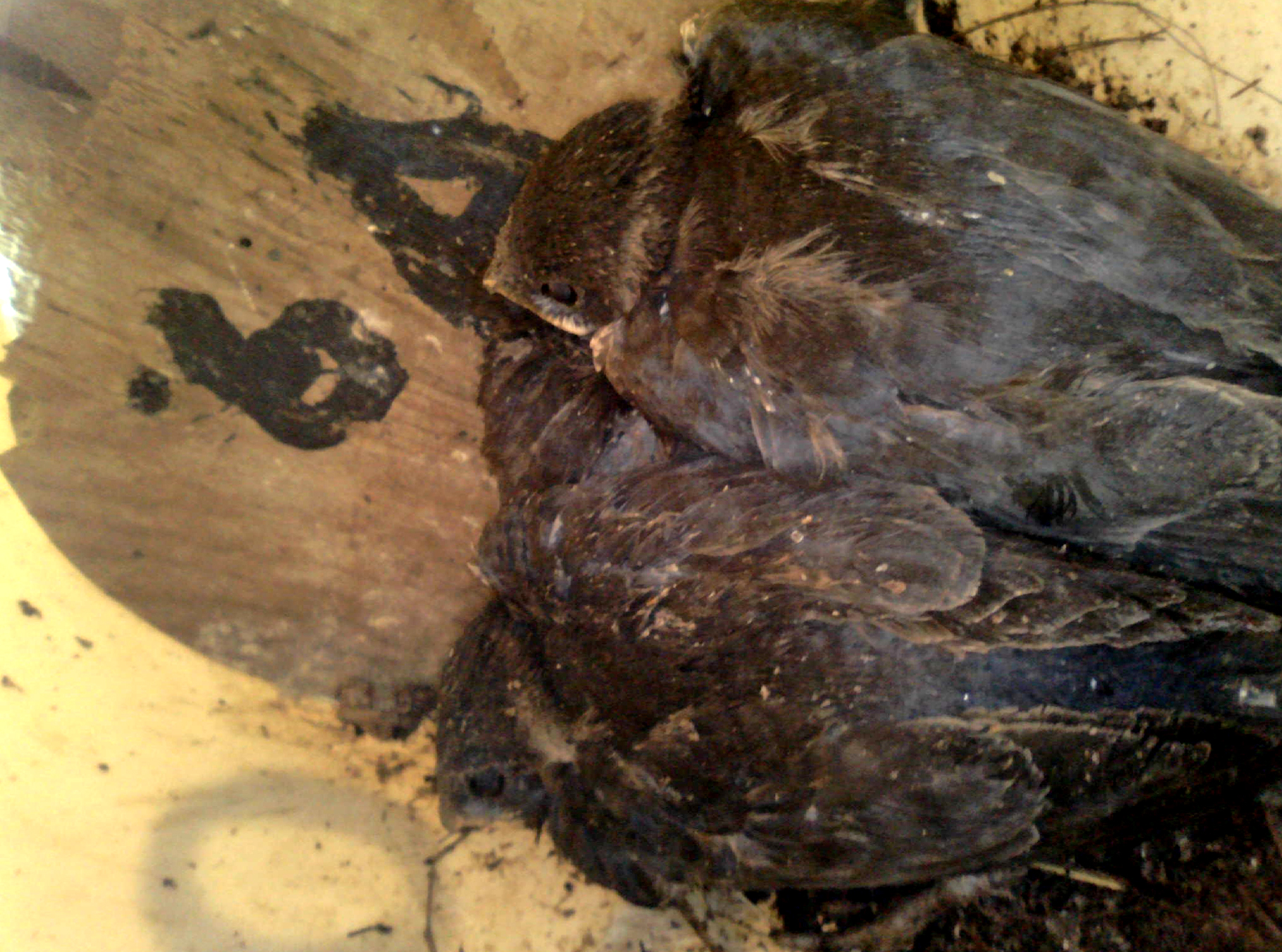
On June 14th all the grasses we primed Box 5C with had been removed. On June 28th new nesting material had been delivered, along with some green sea grass. The nest looked complete on July 16th, and on July 30th there were three eggs. Today we found three hatchlings that look about 2-3 days old. If they survive, they will be the last to fledge, likely after most of the colony begins their migration.

OPAS 6A

Purple Martin Box 6A at 3 Crabs. 8/14/2026

Box 6A had two eggs on June 28th and four on July 16th. On July 30th there were four hungry chicks. Today there are at least three, if not four fully feathered chicks. Perhaps they have fledged but just returned to the nest to rest and keep warm.

OPAS 6A

Purple Martin Box 6B at 3 Crabs. 8/14/2026

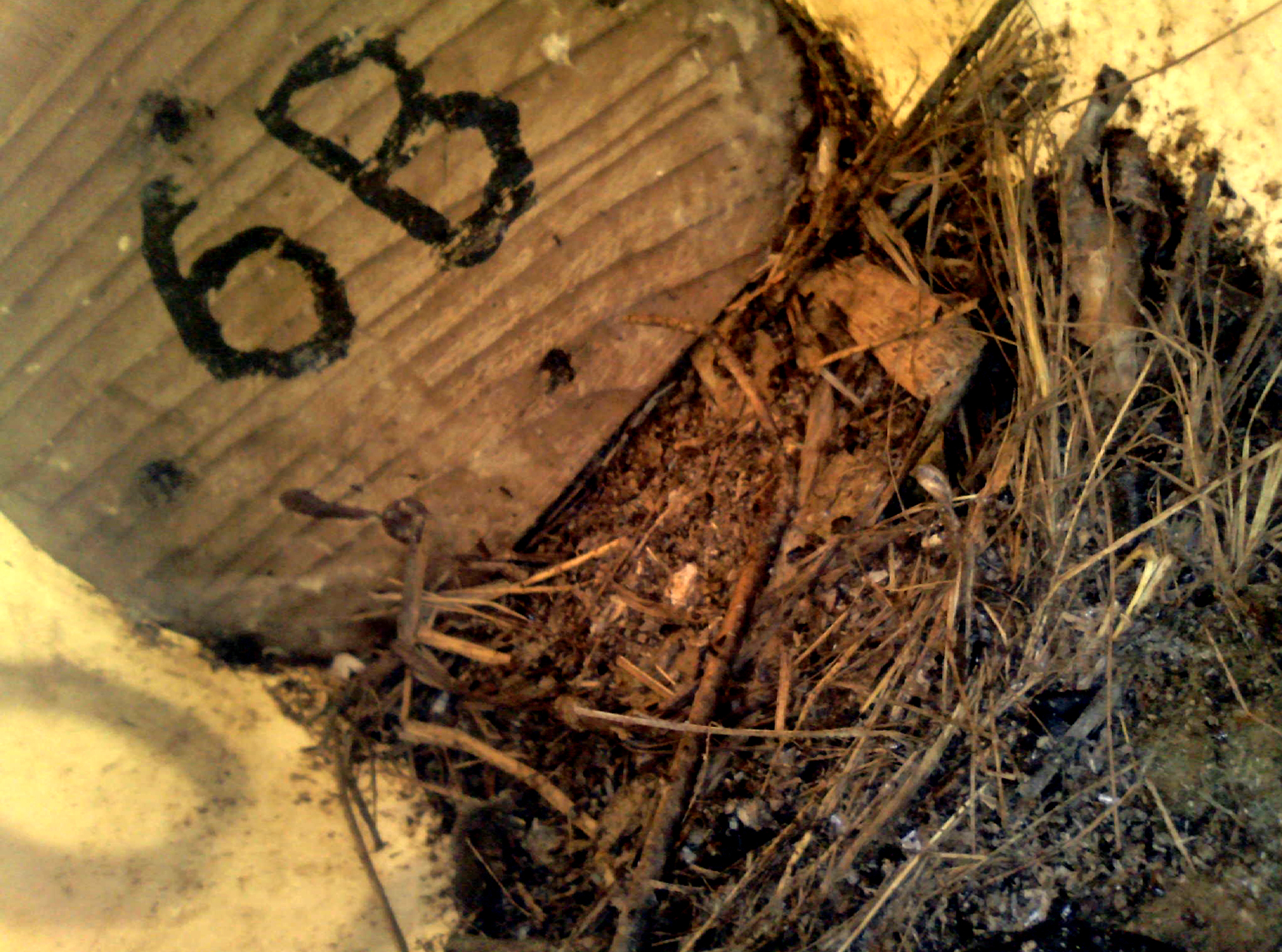
Box 6B had 5 eggs on June 28th and five 2-3-day old chicks on July 16th. On July 30th there was a pile of at least four and likely five chicks. Today the nest is empty, and we assume all the chicks fledged.

OPAS 6C

Purple Martin Box 6C at 3 Crabs. 8/14/2026

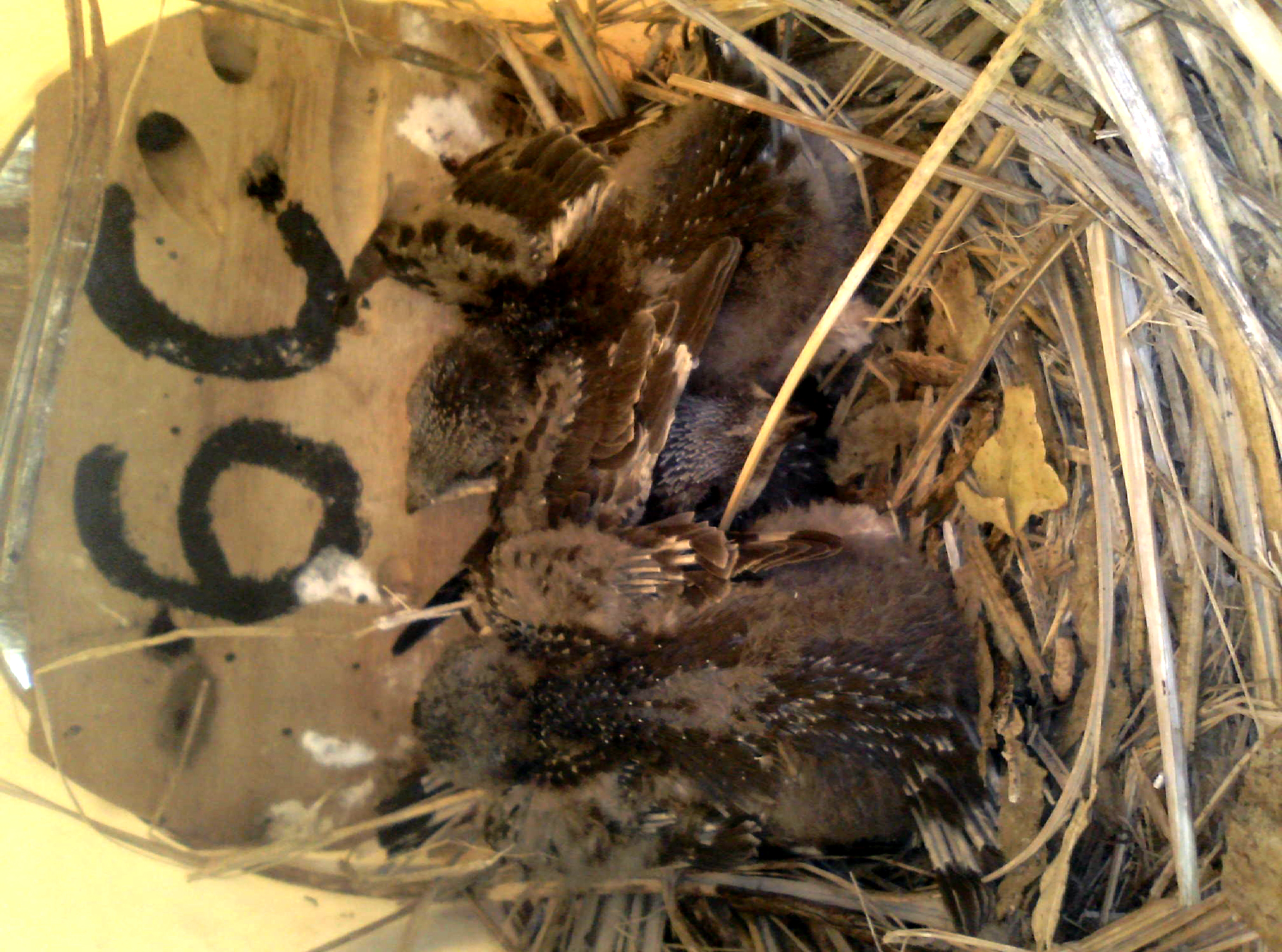
There were five eggs in Box 6C on June 14th. On June 28th we found one whole egg and one cracked egg. There were three chicks out of their eggs and one struggling to get out. See the video below for better detail. Sadly, on July 16th those chicks and eggs were gone and there were four new eggs. What happened? On July 30th there were four newly hatched chicks. Today they appear healthy and growing. With luck they will fledge by the end of the month and be ready to migrate south with the colony.


If you have Internet Explorer 10 or current versions of Chrome, Firefox, or a new iPad, you should be able to play a short video of the fourth chick hatching in Box 6C..

Click Here to play the video in your web browser (requires an HTML5-compliant web browser). When you finish, click the HOME button at the bottom left edge of the page, or click the picture of me in the upper left corner of the page, to return to this page.

If the video won't play click here to try it with your system software.
Purple Martins

3 Crabs Colony


September 19, 2026 - Season Summary

This year the first Purple Martin male scout to return to 3 Crabs was reported on April 15th, two days earlier than last year. I just missed it that day, but found it the next morning.


Purple Martin

First male Purple Martin scout. 4/16/2026


More birds arrived over the next few weeks, and on May 9th, International Migratory Bird Day, Ken and I counted 32 PUMA. There were likely more that we didn't see. After three weeks resting, feeding and claiming their nest boxes, they began gathering grass, wet seaweed, and sticks, one stick at a time, to build their nests.


Purple Martin

Female Purple Martin gathering nest material. 5/21/2026


Purple Martin

Purple Martins claiming nest boxes. 5/21/2026


Purple Martin

Female Purple Martin gathering nest material. 5/27/2026


This season the Olympic Penninsula Audubon Society Purple Martin Team conducted five nest box surveys of the 18 nest boxes mounted on three pilings over the tide flats at 3 Crabs Beach, and monitored activity at six nest boxes mounted over the onshore tidal lagoon. In addition, many hours were spent observing nesting activity, taking photos and video, and trying to document feeding behavior or removal of fecal sacs from nest boxes. This was a very cool season for the PUMA, and several nests failed after eggs were laid and chicks hatched. but we still estimate at least 42 chicks from 19 adult breeding pairs started their first migration by mid-September. The details of each of those surveys is in the center column on this page, following the September 19th addendum. What follows here is a brief summary.

Our first inspection, on June 14th, found 14 eggs in three of the 18 nest boxes on the pilings. Two weeks later, on June 28th, there were 45 eggs in eleven nests. Three nests had 13 newly hatched chicks, just 1-2 days old.

On July 16th we found 17 eggs and 39 chicks. Sadly, five eggs from Box 1A had hatched, but those chicks were all dead in the nest. On July 30th one nest had three eggs and we counted 32-36 chicks in 11 nests.

Our final survey, on August 14th, found no eggs but 15 chicks in four nests. The chicks in two nests looked like they had fledged but were just resting. Box 6C had four chicks that were 15-16 days old. These chicks were all out of the nest on August 26th.

The remaining three chicks, in Box 5C, were only 3-4 days old. One died and the other two did not fledge until September 7th. For the next week they followed their mother around during the day and returned to the nest in the evening. Sometimes the mother would bring food to the nest, but that ended after 3-4 days when they had learned to feed themselves.

I last saw these three Purple Martins on the evening of September 14th. The next afternoon another local birder photograhed a single female perched in a tree along the Dungeness River Levee trail. And on September 18th an anonymous eBirder reported 2-3 martins perched on a power line across from Helen's Pond, just east of the 3 Crabs nests.

Yesterday, September 18th, only eight Purple Martins were reported on eBird in all of Washington State. These were all at Ridgefield. Perhaps our three were among them.

We are unable to inspect the six boxes mounted over the tidal lagoon, but we observed at least three of those produced at least six chicks this year.


Some favorite photos of the season

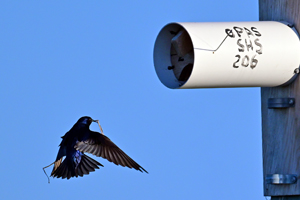
Last year we had a banded female nesting in Box 4C out on the tide flats. On May 24th, I photographed this banded female collecting wet seaweed and mud and delivering it to Box 206 adjacent to the parking lot. Hopefully we will be able to get the numbers from the bands. Both birds have a green color band on the left leg. If this is the same bird, it was banded on July 26, 2020 near Cathlamet in Wahkiakum County, Washington.


Purple Martin

Banded female collecting wet material for nest. 5/24/2026


Purple Martin

Banded female delivering nesting material to Box 206. 5/24/2026


Her mate helps gather and deliver nest material


Purple Martin

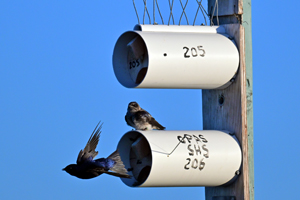
This is the mate to the banded female. 5/28/2026


Today is special. He flew up to perch on the nearby power pole. She remained, preening, for three minutes, then joined him.


Purple Martin

Banded female with her mate. 6/1/2026


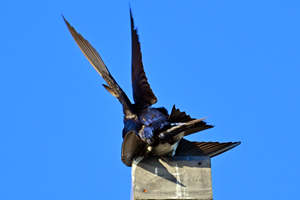
They are now officially a mated pair.

Purple Martin

Hey! Get a room! 6/1/2026


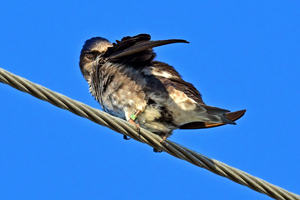
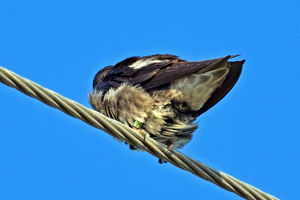
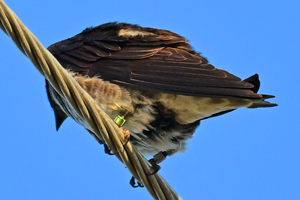
On June 2nd the female spent several minutes preening while perched on a power line. As she moved around the green band on her leg kept rotating. It took 50 shots before I finally had three that captured all the letters and numbers. Yes! This female is the same female we had here last year, with the green color-band showing WA W018.

Although this female was banded as a chick in the nest in 2020, 200 miles south of 3 Crabs at the Julia Hansen Butler Refuge, for some reason she came here last year and again this year. So this is her sixth round-trip to southeast Brazil, approximately 8,000 miles each way! The average life span of Purple Martins in the wild is estimated at 5-7 years. Will she be back next year?

Click each image to see a close-up of the band.

Purple Martin

Green color band showing WA W. 6/2/2026


Purple Martin

Green color band showing W 01. 6/2/2026


Purple Martin

Green color band showing 18. 6/2/2026


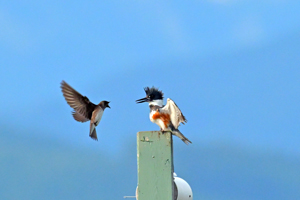
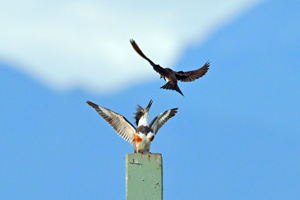
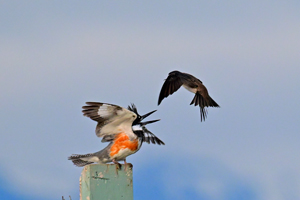
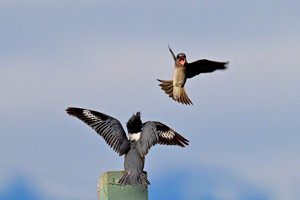
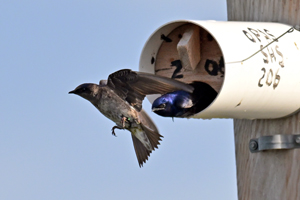
For half the year, the resident Belted Kingfishers frequently perch on top of the supports for the nest boxes over the tidal lagoon. From there they dive into the lagoon to catch fish. When the Purple Martins return and start building their nests, there are some territorial disputes. Soon the kingishers give up until the martins leave in the fall. In this series it took multiple Purple Martins three minutes to finally chase the kinfisher away.

Purple Martin

Purple Martin vs. Belted Kingfisher. 6/8/2026


Purple Martin

Purple Martin vs. Belted Kingfisher. 6/8/2026


Purple Martin

Purple Martin vs. Belted Kingfisher. 6/8/2026


Purple Martin

Purple Martin vs. Belted Kingfisher. 6/8/2026


Purple Martin

Banded female with her mate; still building their nest. 6/26/2026


Purple Martin

First food delivery seen. 7/13/2026


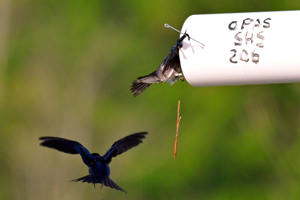
Today we started seeing chicks at the door waiting for food. There are at least two chicks in Boxes 201, 204, and 206. These boxes are all over the tidal lagoon, and are inaccessible to our endoscope, so we can only confirm two chicks in each box.

Purple Martin

First chicks at nest opening. 7/25/2026


Our banded female has at least two chicks jockying for position at the buffet.

Purple Martin

First chicks at nest opening...at least two in nest. 7/25/2026


Box 204 also has at least two chicks.

Purple Martin

First chicks at nest opening...at least two in nest. 7/25/2026


Box 201 produced the first fledglings.

Purple Martin

First fledglings. 7/26/2026


Box 201 produced the first fledglings.

Purple Martin

First fledglings. 7/26/2026


Box 206 chicks will be next to fledge..

Purple Martin

First fledglings. 7/27/2026


Box 204 chicks are getting close.

Purple Martin

First fledglings. 7/28/2026


During our nest box survey on July 30th, local videographer John Gussman joined us to help document the activity. His patience was rewarded with this great slow-motion video of parents feeding hungry chicks in nest boxes over the tidal lagoon. NOTE: this is a 136MB file so it may take a minute to load before it starts playing. My thanks to John Gussman for permission to share his video here.


The next day, I found fledglings getting fed out of the nest.

Purple Martin

First fledglings. 7/31/2026


In this photo, one fledgling is following the adult. Box 205 did not have a nest, so the fledgling in it is probably from Box 204 or Box 206.

Purple Martin

Still hoping food will be delivered. 8/1/2026


The arrival of a juvenile Bald Eagle really upset the Purple Martins. I count 21 in the air in this photo. The eagle ignored them.

Purple Martin

Juvenile Bald Eagle annoying the Purple Martin colony. 8/13/2026


This is the last day I saw most of the colony. In the following week the four chicks in Box 6C out on the pilings fledged. They only hung around for a few days and then they were gone. The story of the chicks in Box 5C, the last nest remaining, is presented in the center pane on your left.

Purple Martin

Purple Martins waiting for dark to leave for Brazil tonight. 8/24/2026


History

Efforts to establish a Purple Martin (PUMA) colony at 3 Crabs Estuary in Dungeness, WA began in the mid-1990s. Volunteers from the Olympic Peninsula Audubon Society (OPAS) constructed four simple nest boxes and hung them on old pilings that they accessed by boat. By 2005 PUMA were returning regularly and OPAS began adding more boxes. Instead of using a boat at high tide, volunteers monitored the nests at minus tides when they could walk out on the tide flats and raise and lower the boxes with a 10' pole.


Purple Martin nest boxes on pilings

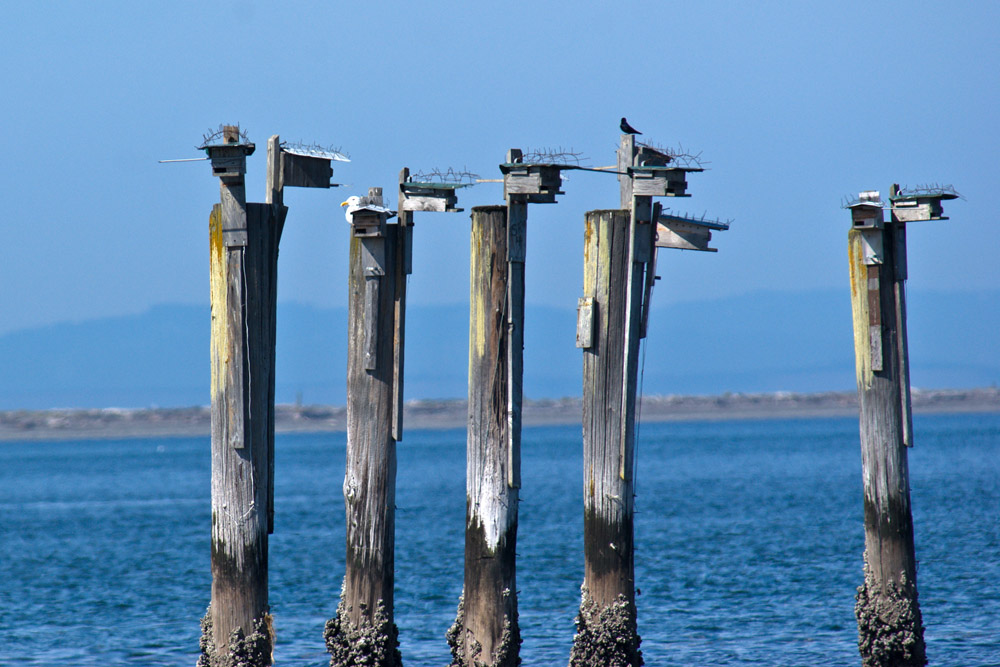
Purple Martin nest boxes at 3 Crabs, 5/16/2010


For more information on the history of the OPAS Purple Martin project, see: Purple Martin Nest Box Study,

There are also some excellent blog posts about the PUMA outings here: OPAS Blog,

I joined the other volunteers in 2009 and have helped build, maintain, and monitor the nest boxes ever since. Every fall, after the Purple Martins head south, we bring in the nest boxes to clean, repair, and store until spring. The goal is to put the boxes back up shortly before the PUMA return in early to mid-April. The challenge is that we have to do this task when we have a daylight minus tide. The PUMA do not read our tide charts so sometimes they arrive while we are putting up the boxes, and sometimes we put the boxes up a week or two before they arrive.

Newly retired, young and fit, I took over the task of lowering the nest boxes on a 10' pole, so we could hang them on a nail at eye level. Then we would remove the door, insert a mirror, and take a picture of the reflection of the nest in the mirror.


Purple Martin nest

Checking a Purple Martin nest box at 3 Crabs Beach, 6/22/2009


Finally we replaced the door, raised the nest box on the pole and hung it up again. This was somewhat challenging on a calm day and very challenging on a windy day. After a wind gust nearly caused me to drop a box containing eggs I proposed screwing a board to the feet of an extension ladder so it wouldn't sink in the mud, and inspecting the boxes from the ladder. This created new challenges but over the years we have modified nest boxes, the ladder, and the method of taking photos. Here is what that process looked like:


Checking PUMA boxes

Checking a Purple Martin nest box at 3 Crabs Beach, 7/12/2018 (by Sally Harris)


In 2018, the Washington Department of Fish and Wildlife, North Olympic Salmon Coalition, and about 28 other organizations completed a major project to restore the Dungeness Estuary at 3 Crabs. This effort included removing the 3 Crabs Restaurant and an old bridge over Meadowbrook Creek, rerouting the road and constructing a new bridge, and removing several hundred old creosote-covered pilings left over from the Dungeness Wharf. Yes, including the pilings that we hung the Purple Martin boxes on. To understand the scope of this project, watch the excellent 8-minute documentary produced by local cinematographer John Gussman, titled 3 Crabs, 5 Salmon, 30 Partners.

You may also enjoy my 4-minute video of the piling removal, which happened from October 9-10, 2018. NOTE: this is a 65MB file so it may take a minute to load before it starts playing. For those of you who are fact-checking me, be aware that the Purple Martins you hear singing in this video were half-way to Brazil, having left town in early September. Chalk this up to poetic license on my part.;)

Fortunately, OPAS negotiations resulted in three new steel pilings placed where we specified on the tide flats where we had been hanging the boxes on about ten pilings. If you watched the above video of the piling removal, you will see that they installed the three steel pilings before beginning to remove the old pilings. In 2012 we began experimenting with a new box design, using 6" PVC pipe mounted on a 1x6" backboard and then attached to piling.


New PVC nest box

New PVC nest box design at 3 Crabs, 6/21/2012


The Purple Martins seemed happy with this design and we slowly started replacing old wood boxes with these new, lighter boxes. In June 2018, with permission from the Washington Department of Fish and Wildlife, we mounted two duplex nest boxes in the tidal lagoon adjacent to the parking lot at 3 Crabs.


checking a nest box

New nest box installation at 3 Crabs, 6/26/2018


Since we now only had three pilings, we spent the fall and winter designing and building six Purple Martin triplexes using the 6" PVC pipe. Here is a photo of the new boxes ready to install. What looks like a nose is a handle for pushing the door in or pulling it out. A small nail on each side secures the door. The hole near the top on the right side of the handles is an access hole for inserting an endoscope camera to photograph the nest. So we no longer have to remove the door, which is safer for the birds and for the person on the ladder.


PUMA triplexes

New triplexes ready for installation, 3/17/2019


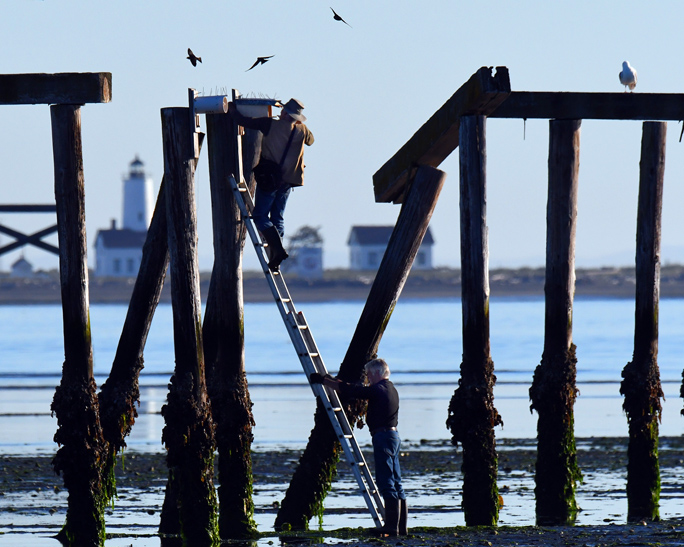
We also added a stand-off to the ladder. The photo below, captured by John Gussman, shows me inserting the endoscope into Box 1A while looking at the image on my cell phone. When I get the image focused on the nest, and showing the box number on the back of the box, I press a button on the screen to take the photo. I really appreciate the ground crew holding the ladder steady. We can now photograph all 18 nests in under 20 minutes, vastly reducing the annoyance factor for the birds.


checking a nest box

Checking a Purple Martin nest box at 3 Crabs Beach, 7/12/2025. Photo courtesy of John Gussman.